Find us on Google+
Showing posts with label disciple cycle. Show all posts

Friday, June 15, 2012

Learn to Talk about Other Things


Christians are boring. Not all the time, but too often. Church-goers talk about churchy-stuff to other church-goers. Boring.

It’s no different from going to an accounting convention (no disrespect to accountants). They stand around talking about accounting and it’s boring to anyone who’s not an accountant.

Remember that time when you met someone and they liked the things that you like? They’d seen the same movies. They laughed at the same TV shows. They liked the same sports teams. They had the same hobbies. It was great, I’d bet. It’s fun to talk about what you love with other people who love the same thing.

If you can’t talk about what you love with someone else who loves it, the next best thing is to talk about what you love to someone who’s interested. So, be interested in what other people love. If they love books, learn to talk about  books. If they love golf or fishing or cooking or travel, then learn to talk about that.

It might sound difficult to become an expert on every topic of conversation. It is. That’s impossible. But there’s a trick. Ask questions.

Questions are the key to any conversation. Learn how to ask good questions that draw people out instead of shutting them off.

You: Hi, nice to meet you.
Them: Hello.
You: So, how do you spend your week? (note: this doesn’t assume they have a job, so it’s good for people in school or moms who stay home).
Them: Oh, I’m a schematic engineer at Flondorian and Associates.
You: Huh! I don’t think I’ve heard of them. What does that mean?
Them: Well it means I . . . (I’m not going to go into too much of this, just enough so you get the idea).
You: Wow. That sounds complicated. How did you get into it?
Them: [History, School, etc.]
You: Oh, you went to school in [place] what was that like?
Them: [more history, experiences]
You: Wow I’ve always wanted to [experience] what gave you the nerve to do it?
Them: [more history, emotions, thoughts]
You: I never thought of it that way. That’s a really good point. (people like to be complimented – whenever you can offer a sincere compliment, do it).
Them: [connected thought, more history/experience]
You: How does that affect what you’re doing now?

I won’t belabor the point, but you should be able to see how questions can keep a conversation going and focused on what the other person is passionate about. You don’t have to be an expert in schematic engineering (whatever that is), but they are, so you can keep asking questions about it.

Our tendency is to be selfish and talk about the topics we already know (and love), but that limits the people we can connect with to our limited experience. If you want the chance to be friends with more people, you’ll need to learn how to have conversations about other topics than just what you already know. Asking questions will make it possible.

Come up with a list of ten questions that are good conversation continuers (not starters).

Thursday, June 14, 2012

Be Who You Want to Meet


They don't quite get the Golden Rule.

“Do unto others as you would have them to unto you.”

Jesus stated the Golden Rule, and it’s one of his teachings that has crept into nearly every person’s awareness. Stated more plainly – treat people the way you want to be treated.

How do you want to meet people?

For me, I don’t want people knocking on my door when I’m sitting down to dinner. I don’t want them sticking a clipboard in my face when I’m going into a store. I don’t want to get a phone call at 9:30pm when I’m trying to watch a movie with friends. I don’t want an impersonal mailer extoling the life-changing effects of something I’ve never heard of. I don’t want an email from a stranger with a deal that’s too good to be true.

I don’t want any of that stuff. So why would I do it to anyone else?

I want to meet people on my terms, where I’m comfortable and when I’m ready. So that’s how I need to approach meeting other people. Their terms. Their comfortableness. Their time.

Here’s the kicker. When you treat other people they way you want to be treated you end up sacrificing your preferences for theirs. The Golden Rule doesn’t mean you get to be selfish and have everything your way. Instead it means that you get to give up your way. You get to learn how other people like things and do that instead.

Jesus will mess up your life like that. 

Wednesday, May 23, 2012

I'll be a Friend Like Jesus


When I was growing up in church we sang a song entitled “I’ll be a Friend to Jesus.” It was all about loving Jesus when no one else would. But the more I think about it, the more it seems that Jesus was really good at making friends. He had no shortage of people who wanted to be his BFF (best friend forever). Jesus was constantly at dinner parties and surrounded by people who wanted to be with him. There was just something inherently friendly about Jesus. He had qualities that made people want to be with him.

Don’t always be the center of attention. Jesus knew when it was time to hang back and when it was time to take the lead. There were many parties where he was the focus and the honored guest. But when he went to a friend’s wedding, he let the bride and groom be the stars of the show. Even when Jesus performed a miracle, he kept it on the down-low so that the couple could continue to enjoy their wedding.

Want to be where the people are. Jesus often went off alone early in the morning or late at night. He knew the value of being by himself. But when he went to parties, he was in the midst of the crowd. He had conversations with Pharisees, tax collectors, teachers of the law, various sinners and even suspected prostitutes. Jesus was surrounded by people, not off in the corner hiding from conversation.

Speak the language of others. Instead of forcing everyone to talk about his topics of conversation, Jesus was able to have conversations on topics that were comfortable and familiar to the people around him. He would talk about farming or trading or politics as the situation dictated. If the people around him were deep into religious studies, he’d talk about that too. I’m convinced that if Jerusalem had a football team, Jesus would know the players and be able to talk about the game. He was well-rounded and able to converse on many different topics.

Know when to take the conversation deeper. Jesus had impeccable instincts for when to share a story or thought that would cut to the heart of an issue. When he was talking with the woman at the well in John 4, he effortlessly and insightfully found the real issues that were troubling her. He went from a surface-level conversation about the differences between Jews and Samaritans to a personal discussion of the woman’s faith and life. It takes time and skill to develop the instincts to take conversations to a deeper level; most of all, it takes a genuine love for people.

When you love people, you listen to them and want to hear what’s important to them. When they feel that love, they’ll be invited to open up and share deeper issues with you. Don’t force a conversation where it’s not going. Let it happen and be available when you friend is ready to talk.

Be comfortably awkward. Jesus brought an awkward presence wherever he went and he was comfortable with it. As a rabbi, it was uncommon for him to go and eat with those labeled as sinners. But he did it with complete confidence, not because it wasn’t awkward, but because he loved the people.

As a Christian, I’ve been to parties where I was an awkward presence, but I was comfortable with it because I loved (still do) the people at the party. Once we approached that awkward moment and moved past it, my friends were better able to see that I loved them more than I was worried about appearances.

Friendship doesn’t equate with condoning. Jesus was accused of condoning prostitution, embezzlement and blasphemy because he was friends with people who did those things. Never once did Jesus apologize or stop being friends with them. Neither did he condone things that were wrong.

I have friends who’ve done everything. I don’t condone sin, but I will continue to be their friends. I love them. It’s not my job to convince them that what they’re doing is wrong. It’s my job to be their friend. My condoning or not condoning their actions has no bearing on their lives or the lives of anyone else. What does, though, is how much I care about them and show it to them with my actions.

What other ways was Jesus a good friend? How can you be more like Jesus in your friendships? 

Monday, May 21, 2012

Making Friends


It was so easy once. When I was 9 years old I saw a kid riding his bike down my street. I asked, “Do you want to be my friend?” He agreed and we were friends. Simple.

But now, as an adult, friendship doesn’t come so naturally. I would never dream of asking someone on the street if they wanted to be friends. And if I did, I’m sure they would think it an odd proposition.

Friendship typically happens due to proximity, time and shared interests. It was easy for me to be friends with the kid on my street because we had great proximity (one house separated ours), we were children so we had plenty of time and little boys are generally interested in the same things (bikes, robots, guns, trucks, the usual).

In school it’s not much different. You’re friends with the people you spend time with in your classes and extracurricular activities – so you share an interest in track or choir and you become friends with the other people who are doing the same things. You don’t stop to think about the way that bus rides on choir tour build friendship or the regular time together working on sprints deepens your relationships. You’re just doing things and the friendships happen.

As adults, though, friendships are harder to start. Sometimes we try to hold on to the friendships of our youth. There’s a strong foundation there that we can build on, but if we lack proximity, time and shared interest, it’s difficult to keep building the friendship. Time fades the connections of the past and the old track and choir buddies from high school lose touch.

Work friends are very common. There’s a lot of time and proximity to build the relationships. Sharing interests, no matter how few, will make work friendships happen. It’s just easier to spend 8 (or more) hours a day at work when you feel a connection with the people. But most work friendships don’t survive a transfer or job change. Shared interest is, perhaps, the most important ingredient for creating friendships. The stronger the interest, the more quickly the friendships can grow.

For Jesus followers who want to be friends with non-Christians, this poses a problem. So much of church life is set up to separate and segregate Christians from non-Christians. The interests are all church-based, the activities are church-located and the time is church-focused. There’s the unspoken rule that you should be spending your time at church doing church things with church people.

If you do that, you’ll only be friends with other church people.

Sure, you might have a few work friends, but those are typically superficial relationships. A few people will really connect with coworkers, but most don’t spend any time outside work. So, if all of your interests are fulfilled by the church, you have no space for making friends with non-Christians.

How many friends do you have that are non-Christians? How did you develop those friendships? 

Friday, May 18, 2012

Questions Come from Doubt

Jesus doubted.

On the cross, Jesus cried out "My God, My God, why have you forsaken me?" Just hours before that, he prayed that he could be spared the trial that was coming. He wanted any other option. He questioned the plan of God. Jesus doubted.

For whatever reason, the notion of doubt has gotten a bad reputation. There's this unspoken idea that we must have absolute certainty in what we believe. It may come from the Enlightenment which elevated rational thought above all else. It might be a part of the Industrial Revolution where precision was the key to productivity and success. It might be the prevalence of the 24 hour news cycle that encourages newscasters to spout out positional statements in a non-stop stream.

Doubt is not bad. It's not the opposite of faith, it's not detrimental to the Christian life and it's not something to be avoided.

Not only did Jesus doubt, but he inspired others to doubt as well.

I can feel your fingers ready to type comments at me about how Jesus rebuked doubting Thomas for his lack of belief. That's true. Jesus said that it was more blessed to not see and still believe. But he still answered Thomas' questions; he still provided the evidence that Thomas craved.

In essence, what Jesus said to Thomas is this: You must pass through doubt to get to faith; some make the journey more easily than others, but I will help everyone who's willing to embark on the path.

The bible is filled with doubters. Abraham, Jacob, Gideon, Job, Moses, David, Peter, Paul, and more. The heroes of faith were those who suffered through doubt. They willingly stepped into doubt, despite the fear, despite the danger. They walked the path of doubt and found faith.

Faith can't be had without doubt. Hebrews 11.1 says: "Now, faith is being sure of what we hope for and certain of what we do not see." Confident surety in an invisible future without any prior doubting isn't faith, it's blindness. God doesn't call us to that, he didn't ask it of any of his exemplary followers, nor did his son live that way.

The questions of doubt lead us to faith rather than away from it.
"Does God really exist?"
"Is Jesus the son of God?"
"Is God really good?"
"If God is good, why do bad things happen?"
"How can God be all loving and the church be so hateful?"

If you aren't willing to wrestle with these questions, they will undermine and poison your psyche until your religious system crumbles. So much of Christian industry exists for the sole purpose of defending church-goers from hard questions. Christian industry is anti-doubt and therefore destroys faith.

I don't think anyone is doing it on purpose. I believe that the people in Christian industry are honestly trying to help. But their attempt to defend faith by avoiding doubt is akin to saving people from falling into a river by tearing down the bridge. There is a risk that those who attempt to cross over the doubt-bridge will fall off and be swept away, but without any bridge at all, the raging river is impossible to cross safely.

Wednesday, May 16, 2012

Ask the Right Questions

While it's important to ask questions, asking the wrong questions isn't particularly helpful. In the book Getting to Yes: Negotiating Agreement Without Giving In, authors Roger Fisher and William Ury share principles on negotiating. Many of the same principles apply to questioning and living the disciple cycle.

When it comes time to formulate your questions, look at principles instead of positions.

In negotiation, a position is a statement of what you want. "I want a raise." "I want a book deal." "I want this car for $1,000 less."

Positions create a clear winner and a clear loser. Positions are binary statements. Yes or no. You get the raise or you don't. You get the deal or you don't. There's no room for differing opinions outside the proffered options.

Positional questions:
"Are you a Democrat or a Republican?"
"Are you for or against abortion?"
"Do you think gay marriage should be legal?"
"Is it a sin to get drunk?"
"Do I have to go to church on Sunday?"
"Is the bible inerrant?"

Principles are analog statements. They offer a range of opportunities in negotiations. Principles underlie positions. Positions are the symptom, principles are the disease.

Behind the position of wanting a raise might be the principle of wanting to save for retirement. Behind the position of wanting a book deal might be a principle of wanting opportunities to speak and teach. Behind the position of wanting a discount might be a principle of having a maximum monthly budget for the car.

Once the principles are stated and clear, it's possible to be creative and look for other ways to meet the principles rather than just the stated positions.

Principle questions take more time to formulate. In a way, they require diagnosing the issues that lead to the positions. Why does someone want to know if you're a Democrat or a Republican? When you figure out why they're so interested in the positions, you can start to work back toward the principles. For example, in the debate about gay marriage in the US the questions posed don't really address the underlying principles involved.

Conservative people tend to be against gay marriage. They argue that it erodes family values. Their family values are based on moral convictions. The moral convictions rely, largely, on religious teaching. Therefore, the principle is one of religious teaching being applied to civil laws.

The conversation isn't really about gay marriage, it's about State's Rights and the First Amendment of the Constitution. Asking questions about the principles will lead to a variety of answers, not just two. The result is far more messy, but it's also much more productive and helpful.

(Note: the book link earns me a small commission on any purchases).

Monday, May 14, 2012

Ask Questions


Questions are like nuclear reactions, the power inside can transform or destroy, but there is no denying the sheer power available. Despite the power of questions, or perhaps because of it, they are in rare supply. Statements are far more common. Look at this paragraph, for example.

Good questions apply the gas; statements put on the brakes. Questions create space; statements define limits. Questions inspire new thoughts; statements regurgitate old ones.

Of course, a well-crafted statement can function like a question inspiring, and motivating. And a poorly-crafted question can be a blunt instrument used to defeat and subjugate rather than liberate minds. It’s not simply the punctuation mark at the end of the sentence that makes the difference. It’s the attitude behind the sentences.

A questioning attitude assumes humility, patience and value for others. It’s the admission that you and I might be wrong. It’s the wisdom that lies in lacking knowledge as opposed to the hubris of supposed omniscience.

Jesus-followers are questioners. He taught the process, he invited questions and he led his disciples through the process. Jesus expressed his gentle strength by inviting people to question with him.
“Who do people say that I am?”
                “Will you give me a drink?”
                                “Is there no one left to condemn you?”

Each question digs deeper into the relationship. They invite more questions, more conversation, more understanding. Jesus doesn’t often presume to dictate, but he has no problem sparking new thoughts with his insightful questions.

Followers of Jesus keep questioning. They keep asking, digging, searching, not only to find out more about Jesus, but also to discover more about themselves and the people around them. If you want to be a follower of Jesus, questions are the key, the doorway and the first step through. 

Friday, May 11, 2012

Search for Something

Not seeing the picture is frustrating.

Magic Eye pictures were all the rage in the 90s. The stereoscopic images would become 3D if you could just unfocus your eyes enough. I remember staring at them for hours. Sometimes I couldn’t get a picture to resolve, it would slither and slide tantalizingly just out of focus. But if someone told me what I was supposed to see, it would usually become clear. Just knowing what I was looking for made a difference in my ability to find it.

When you search, search for something. Of course it’s important to realize that there are a range of answers available to every question. Just as it’s important to admit that you might be wrong when searching for answers. But if you don’t even know what you’re looking for, the search will take much longer.

Define the win. Determine what will be true when you’re done searching for the answers that you want. When you ask questions that have tormented philosophers, theologians and scholars for millennia, you aren’t going to find an easy answer. What answer will satisfy you? How will you know when you’ve reached a conclusion?

Limit the parameters. If you go out searching for the meaning of life, you’ll never stop and you’ll never be satisfied. The disciple cycle must move from questioning to searching to discovery and then change. If your questions don’t lead you to live your life differently, you might as well become a philosophy professor. Pare it down to something manageable. Don’t try to find the meaning of life, try to find what you should do with your life today. Don’t try to understand the nature of God all at once, tackle one aspect of God at a time.

Create a process. The searching process might be different for you than it is for me. I like to read everything I can get my hands on and then let my brain sort through it all. I thrive in situations where disagreement brings out the salient points. Think about the ways that you learn best, if you do well with discussion, join a book club on the topic. If you work well by yourself, journal about your search. If you need direction, consider auditing a class on the topic. Create a process that lets you search and learn in the ways that work best for you.

Know what you’re searching for and how you’re going to find it before you begin. Otherwise you might not see the sailboat in the magic eye picture.


Hint, it's not a sailboat or a schooner.

Wednesday, May 09, 2012

You Might Be Wrong


Juan Ponce de León traveled across the Atlantic Ocean to Florida and sought out the Fountain of Youth. He had in his mind the legends that dated back to the time of Herodotus and, as a part of his royal charter to explore the New World, he looked for the fabled fountain.

But he was also skeptical. The search for the fountain was only one of the things he worked on while he explored Florida. He ended his life having never found the fountain, but as the first governor of Puerto Rico for the Spanish crown.

The search for the Fountain of Youth required the question of its existence, the hope that it was real, but also the skepticism that it might not be real. If Ponce de León had believed without question that the fountain was real and located in Florida, then he would have wasted his entire life searching for a myth. But because he allowed for himself to be wrong, he was able to move on and do other things.

The disciple life is no different. We have questions and beliefs that we hold, but we must admit that we might be wrong. At its root, the message of Jesus is that the religious people had been wrong. Those who followed Jesus were the ones that were willing to admit that they’d been wrong. The disciples heard the words of Jesus about the Sabbath and admitted that they’d been wrong; the religious establishment rejected Jesus because they couldn’t be wrong. The disciples admitted that their view of the Messiah was wrong in light of Jesus. They re-understood dietary laws, they found they were wrong about true worship, respecting women, loving people, forgiving, giving and dying.

All followers of Jesus must admit that they’ve been wrong. But that admission doesn’t stop at the moment of conversion. Jesus didn’t come to make converts, he didn’t call his followers to make converts and proselytize the world to a point of view. No, instead Jesus made disciples and called his followers to make disciples. Learners who admitted that they were wrong and continue to live with the possibility that they might be wrong.

Learning is impossible if you can’t be wrong.

Jesus commissioned his followers to make disciples, which translates into learners. So, in essence, Jesus called us to admit that we might be wrong, to give up clinging to the views we’ve been taught and to examine them anew, constantly.

When we’re willing to admit that we might be wrong, then others can admit that we might be right. 

Monday, May 07, 2012

You Find What You Seek


Search for a confirmation of what you already believe and, most likely, you’ll find it. Look for the reasons to keep doing what you’re doing and they will appear. Seek all the ways that your opponents are wrong and you’ll easily locate them.

Or, go after contradictions to what you already believe and you’ll find people who disagree with you. Suss out all the reasons why you should stop your actions and you’ll find them. Hunt for all the ways that your opponents are right and you’ll see a new perspective.

Searching for answers to questions ceased being about locating the correct facts about the time that Google indexed all the knowledge in the known universe (this may be a slight exaggeration). As the sage and philosopher, Homer Simpson said, “Pshhh, facts schmacts. You can prove anything that’s even remotely true with facts.”

Instead of looking for facts, figures and proof-texts that answer our questions, searching gives us the chance to weigh thoughts and opinions. We dig in to disparate viewpoints to see which one holds the most validity. This is a dangerous place, though, when the black-and-white world is cast off, the colors can be blinding.

It’s tempting to remain in a binary world. The answers are either ‘yes’ or ‘no,’ right or wrong, good or bad. Instead, searching leads us to an analog world with a range of answers that merge together. The binary system provides a framework for the immature. For children it’s appropriate that they should see the world in stark terms. Their young minds haven’t developed to the point of isolating subtle differences. Children are taught to not lie – binary. Adults use tact avoid giving offense – analog.

The same principle applies to matters of faith. Those new to the faith need firm boundaries within which they can explore and learn. However, maturity brings a multitude of shades and variations that need to be addressed.

Binary
·         The bible is the word of God.
·         The preacher teaches us about God.
·         Creation is good.
·         The church is God’s people on earth.
·         Good people go to heaven; bad people go to hell.

Analog
·         The bible was inspired by God, written by humans and copied by other humans.
·         Each preacher’s words should be compared to God’s word and examined for truth.
·         God created humans with the ability to do evil, creation was cursed and the world is suffering from disease, destruction and pain. God hasn’t fixed it yet.
·         Churches can be good or bad, church members can represent God or demonstrate hypocrisy. God hasn’t fixed it yet.
·         God redeems those who choose him and shapes them into heaven-citizens; he respects the wishes of those who don’t choose him and allows them to be apart from him for eternity.

Note: I’m not trying to start an argument about specific doctrines, these are just examples to illustrate the point.

How do you move from binary to analog? In what ways are you, or people around you, stuck in binary thinking? 

Wednesday, May 02, 2012

Faith versus Reason

Just as music must be performed, faith must be lived. Reason and faith vie for your focus and it's nearly impossible to engage them both simultaneously. Multitasking is a neurological impossibility, and so faith and reason are individual activities. They can reinforce and compliment each other, but our limited minds can't hold both of them together at the same time.

When two separate activities occur together, the pace is almost never the same. Rehearsing music improves the technical aspects, but the feeling and pathos of the piece lags behind. When the emotional power of the music is engaged, the notes and rhythm might suffer. We work on one and then the other. Musicians balance the work so that the technical skills and the emotional connection are both in sync. If either one is missing, the music is lost.

A ship is made to sail. Limiting it to a safe harbor is denying its purpose. But it's in the safe harbor where as ship is built, where it's repaired after the storm, where it goes when the journey is over. The harbor isn't the antithesis of what a ship is made for, it's the impetus. It's in the harbor where the journey is made possible, but only by leaving the harbor does the journey begin.

Reason challenges, critiques and dissects. It leaves no corner unexamined. Reason doubts the existence of God, because there is no physical evidence. Reason analyzes the bible to see if it's reliable. Reason looks at the historical failings of the church to predict the future suffering that Christianity will cause. Reason constructs doctrine out of the pieces that survive the culling process.

Faith supports, encourages and motivates. It moves forward boldly. Faith trusts God without requiring proof. Faith judges the bible on its message, not its reliability. Faith looks at the historical failings of the church, weeps, and hopes for a future where the suffering Christianity has caused will be forgiven. Faith constructs a picture of God by stitching together the disparate pieces of religion and spirituality.

Neither faith nor reason are paramount. Both support each other, even as they undermine each other.

The answer isn't to choose one over the other. It's not an either/or proposition. Both/and is an option. Dwell with reason, suss out the meaning of a text, wrestle with doctrine and dogma. Then live in faith, act on the message of a text, wrestle with the closeness and power of God.

Reason calcifies, faith liquefies, together they produce a firm, yet flexible foundation for life.

Monday, April 30, 2012

Reason versus Faith


There seems to be a contradiction between faith and reason. Recently  “University of British Columbia study finds that analytic thinking can decrease religious belief, even in devout believers” The research looked into the way in which problem-solving thought processes affected the self-reporting of religious belief. When participants used analytic thought, belief went down, but intuitive thought did not adversely affect belief.

So, what does this all mean?

From personal experience I have to say this is true. When we analyze something, we apply critical thinking skills and look for flaws. The closest analogy is the difference between rehearsing a song and finally performing it. In the rehearsal, every note is analyzed, the rhythm, pitch, tone and tempo are all dissected. Once the elements of the song are mastered, then they can be put back together to form a coherent whole. But in working on a difficult piece, I will often just speak the words in rhythm to get the pronunciation down. Or I’ll sing the notes without the words to cement the melody. I’m applying so much focus to the act of learning the music that it ceases to be come musical. It’s mechanical. Rote.

The process can stop there. With music, art, writing and religion. There are many people who study these disciplines, dissecting them to the most rudimentary components. Art is about the styles and periods, writing is grammar and syntax, and religion is a series of propositions that must be accepted or denied. It’s mechanical. Rote.

When I rehearse the music enough I can get past the mechanics. What was once dissected is whole again. I don’t have to think laboriously about the words, notes and rhythms. Instead I can focus on the meaning, feeling and musicality of the song. That’s the moment that makes all the effort worthwhile, when I can sing the song as it was meant to be: whole, complete and full. Technical proficience will never produce music. The notes, words and rhythms may be correct, but music is more than that. Music engages the soul as well as the mind.

Analytic thinking has, for me, reduced my religious feelings. It’s hard to believe strongly in God when I’m studying the arguments for the existence of God. My brain is looking for the logical fallacies, not engaging on an emotional level. Prolonged religious study can damage or even cripple religious feeling. I’ve seen it in the people I went to school with. Working through the rationale of faith is a natural and necessary part of discovery. It’s a good thing. But it must happen in context with belief. The head and the heart need to be engaged and communicating.

But what do you do when the head and the heart disagree? 

Friday, April 27, 2012

Ignorance Is (Not) Bliss

There's a bumper sticker that reads: "God said it, I believe it, that settles it."

I don't want to deride anyone's faith. That's not the point and it's not helpful. Faith must, in some sense, be a leap from the known into the mysterious. There comes a point at which logic and reason fail, beyond that pale, only belief will go. Faith is a beautiful, essential part of human existence that allows us to experience more than we can see, taste and touch.

Willful ignorance, however, is worthless.

No one benefits from intransigent ignorance masquerading as devout belief. It's not belief, it's mule-headed stubbornness and a refusal to do the hard work necessary to live an examined life. I apologize for the brusqueness of my tone, but few things get me more angry than contentment, and even praise, with obliviousness. It's the same attitude that led to the Great Depression, the Great Recession, slavery, Jim Crow laws, the Trail of Tears, the Spanish Inquisition, the Crusades and most of the awful things done by one human being to another throughout the course of history. It's not excusable, it's not acceptable and it must stop.

Ignorance is not bliss. It's foolish, dangerous and destructive. It doesn't only hurt the one in ignorance, but everyone surrounding the ignoramus.

Jesus doesn't teach people to be ignorant, willful or otherwise. He consistently challenged the willful ignorance of the religious leaders. They didn't want to consider the human cost of their Sabbath observances, Jesus considered people over religious rites. They found ways to circumvent their family responsibilities, Jesus derided their convoluted rationale for ignoring their parents. They wanted a military, political, religious figure to lead them, Jesus challenged them to apply the Golden Rule.

If you want to be a follower of Jesus, you have to eschew ignorance. Enter into the process of discovery and start on the Disciple Cycle.

Wednesday, April 25, 2012

Discovery isn't Enough

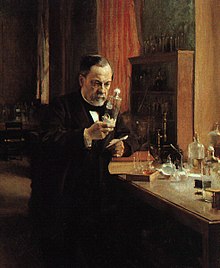
When Louis Pasteur discovered that microscopic organisms were the culprit behind infections, he recommended that all doctors and nurses wash their hands between patients. There was massive resistance in the medical community because they didn’t see the benefit. Pasteur’s discovery was doing nothing to save lives because the people who needed to change weren’t doing it.

Christopher Columbus discovered (or is credited with discovering) a new world with new cultures, new plants and animals and new opportunities. Yet the European nation-states didn’t change their actions. They simply transferred their existing conflicts to the Western Hemisphere. The chance to start everything over with the new discovery was ignored.

For whatever reason we humans can be so enamored with discovery, yet change isn’t the natural next step. We want to know new things, but not have the responsibility to do anything about it. Knowledge is safe, sterile and distant. Knowledge can be contained and tamed so that it makes no demands on how we live. The US educational system is a testament to knowledge divorced from action. The test of learning is a multiple-choice exam. Riskless, feckless and pointless.

I have two degrees in bible, an undergraduate and a master’s degree. In 8 years’ worth of schooling (it may have taken me 12) I had three classes dedicated to practical experience. And there was nothing in all my education that demanded that I change. I was confronted with discoveries about Jesus, the bible and the church on a daily basis, but the litmus test used to determine the worth of my education was writing papers and taking exams. Dedicating my life to discovering more about God had no connection with changing my life to look more like Jesus.

I was discontent, but I didn’t know why. One of the reasons it took me 50% longer to finish my schooling was the fact that I flunked out of college. I didn’t do it on purpose; I just couldn’t muster up the effort necessary to turn in my final projects. I tried, but I just couldn’t do it. Eventually, after taking some time off, I was presented with a compelling reason to finish my education. If I didn’t graduate first, I couldn’t get married (that was the condition set by my father-in-law-to-be). I re-applied myself, finished college and found a purpose for all the education.

But it wasn’t quite the point of all my education. I was happy to complete the task, for the joy set before me, but it didn’t require me to apply anything that I’d discovered.

I can’t blame my professors for teaching me poorly. They did a wonderful job of educating me about the bible. I’m the one who didn’t make a connection between what I was learning and what I was doing. Our educational system isn’t designed to make that connection obvious, but ultimately, it’s my own fault that I didn’t apply everything I discovered and change my life. Not at first, anyway.

Discovery isn’t enough. It must lead to change or the knowledge is useless.

Friday, April 20, 2012

How to Motivate Change

If change is what motivates change, then how do you set up the cycle? All changes start with an awareness of the need to change. You know you need to stop smoking. You know you need to lose weight. You know you need to get out of debt. You know you need to . . .

But just knowing that you need to change isn't enough. Nearly everyone is aware of some change that they need to make, but there's no motivation to actually do it. It might be because the change seems too big or difficult. The changes necessary might affect other things that are hard to give up.

If you're committed to the Disciple Cycle, though, change isn't something you can choose if it's convenient. Change is the heart of being a disciple of Jesus. If you've become convinced that Jesus has taught something, and you want to follow Jesus, then you need to do it. Not out of guilt or fear, but as a way to be more like him.

Ephesians 2:10 says (in my paraphrase) that we are all glorious masterpieces, skillfully crafted by God, in Jesus, to do the good deeds which he made us to do.

You are a work of art, but your purpose isn't to sit on a shelf or hang on a wall. You were created with a purpose. If a Stradivarius violin isn't played, then the true artistry is never revealed. If a Frank Lloyd Wright building is never occupied then it's merely a shell. You are art as well, but art with a job to do, and that job is to grow to look more like Jesus every day. The image will be shaped by your skills, passions and history, but without it, an essential piece of the image of God will be missing from the world.

Change starts with knowing that you need to change, but the next crucial step is learning why you need to change. If you are a follower of Jesus, the why is because you want to look more like him and to be the masterpiece that he created you to be. You need to change so that you can come alive to the full range of beauty that God has shaped in you.

Once you understand why you must change, then you can start to figure out how to change. 

Wednesday, April 18, 2012

Guilt isn't a Good Motivator

Real and lasting life change isn't motivated by guilt or fear. If you want to be on the Disciple Cycle, to change your life in response to Jesus, and to share that good news with other people, then guilt and fear need to be put in their place.

Guilt isn't a bad thing, neither is fear, but they aren't motivational tools. Unfortunately, they are often used to try to motivate people. Churches and preachers may emphasize God's punishment in response to sin as a way to frighten people into following Jesus. Other groups use guilt as a tool for pushing people away from sin and into righteousness.

The problem is that guilt and fear can't be maintained over a long period of time without losing effectiveness. The physical analogy to the emotions of guilt and fear is pain. Pain can be used as a motivator, but the motivation will only last as long as the pain is present and the pain has to constantly increase to maintain the same levels of motivation. Pain wasn't meant to be a physical motivator, so when it's used that way things get bad, quickly. Neither were guilt and fear meant to be emotional motivators.

Pain, like guilt and fear, exists to tell us that something is wrong. If we're injured or about to be injured, the pain of our bodies announces it to our minds. It's telling us to stop what we're doing and look for a way to heal. Guilt and fear are the same; they hurt us emotionally so that we realize we should stop doing something and find a way to heal.

If you're doing something that makes you feel guilty, that's an indication that you should stop. But the next step is to look for healing and hope. If you feel pain because the fire is too hot on your skin, you'll pull your hand away from the flames. You might even run your fingers under cold water, if you burned yourself. When guilt is used as a motivation, it's the same as holding your hand as close to the fire as possible. Guilt can only be maintained in close proximity to the cause of the guilt (the same with fear and pain).

Instead, go to the opposite of what's causing the guilt. Like cool water, look for what will alleviate the pain and heal you. If you're struggling with substance abuse, don't spend time around the substance, look for the reasons that drive you to abuse and address those. If you're trying to not gossip, avoid people who do and find positive things to say.

Motivate change with successful change, not with guilt or fear.

Monday, April 16, 2012

Good News Must be Both Good and News

It all starts with good news. That's a simple fact that most Christians seem to forget. We have (or we're supposed to have) news that is incredibly good to share with the world. The angel announced Jesus by saying, "I bring you good news of great joy." When's the last time you heard news like that? When's the last time you heard it in a church?

The good news is there, if you look for it, but so often it's hidden, underground and obscured. It's more sensational for news organizations to report about churches abusing children, pastors doing drugs and congregations spewing hate. The obvious and glaring dichotomy between the teaching of Jesus and the publicized activity of the church is anything but good news. It's news though, it gets passed around and repeated to the point where Christians have a reputation for being hypocrites. It's definitely news, but it's not good.

Good news is undeniable, no matter the religious convictions of the person hearing it. Good news is the man I met in Kenya who had a reputation for being the town drunk. Through the church, he got sober and started a farm and is now a leader in the community. Good news is the racist white man embracing a black man because they are brother's in Christ. Good news is a woman off drugs, off the streets and out of an abusive relationship. Good news is a marriage that was falling apart finding restoration. Good news is a mourning couple being surrounded and supported by strangers. Good news is there, if you look for it.*

Then why do we have such a hard time sharing good news with non-Christians? One reason, I think, is that we don't experience the good news. All the stories of good news happen when Jesus-followers let their lives be changed by what Jesus has to say. The drunk doesn't sober up unless Jesus has a claim on his life, the racist doesn't give up hate and the addict doesn't stop doing drugs. But for some reason Christians have stopped changing in response to the teachings of Jesus. It seems like there's a point at which the change is deemed no longer necessary. Christians work to achieve a certain level of goodness and then stop, or, at the very least, slow way down.

What if we continued to let the words of Jesus make claims on our lives? What if change was a mark of a Jesus-follower? The Disciple Cycle culminates in change. Questions lead us to do thing differently. If we stay the same, there's no point. There's no cycle and there's no good news. But, if we continue to let Jesus answer our questions with a challenge to change, then we won't run out of news that is too good to keep to ourselves.

*Note, all of these are real things that I personally witnessed.