Find us on Google+

Friday, May 14, 2010

Be Wary of Unintended Emotional Connections


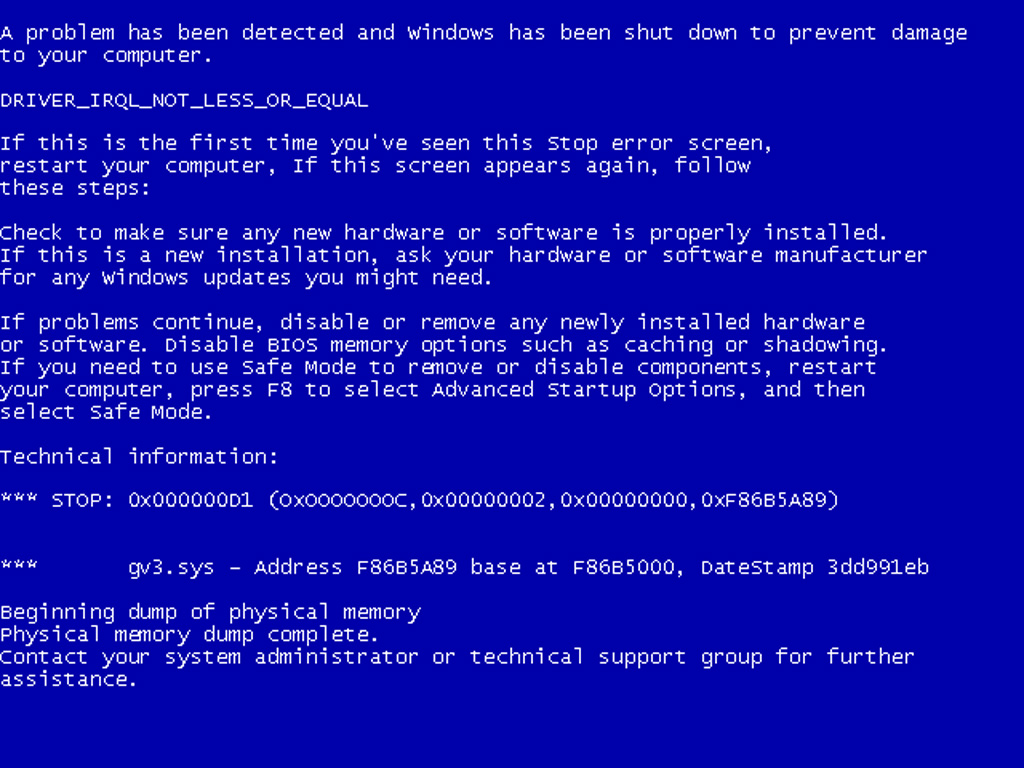
If you are one of the people who owns (or owned) a Windows computer, you've probably seen the Blue Screen of Death at some point in your life. Basically it means that your computer has failed completely and has to be turned off to recover at all. 

So, even though the color combination of white text on a blue background should be soothing, according to the colors that are there, the experience of most people will be to associate this color combination with aggravation and frustration. 

Thursday, May 13, 2010

Learn Some Color Theory

There is a good article here on some basics of color theory. Last week I posted about how color can be interpreted differently in different cultures. But how should those emotional interpretations be used in your presentation?

If you are using a color like red or orange, you probably don't want to make that your background color - even if it communicates the emotions of your work, it's can still be overwhelming in large quantities (except when it's not).

Any color used to exclusion will become overwhelming and lose its impact. Be judicious in your color use to maximize the emotional impact.

Wednesday, May 12, 2010

Microsoft's Upgrade Path

I'm not sure if I should fault Microsoft or the people using their products, but there is a huge problem with the upgrade timelines in the wide world of MS. I know several people who just made the switch from MS Office 2003 to 2007 and within a few weeks the boys in Redmond are going to drop the next version (2010 - original naming scheme here, guys).

If people are one full version and three to seven years behind what you're doing, then there is a fundamental disconnect. I know most people would talk about upgrading software when they upgrade their computers. They would also say that it takes three to seven years for MS to get a program to run with stability. Good points all.

Where is the disconnect between you and your church? What can you do to close that gap?

Tuesday, May 11, 2010

Why Does the Church Listen?

Even if I figure out my motivation for preaching, there needs to be a good reason for the church to listen. What do my words change? Do they come to hear some encouragement? Do they come to hear some challenge? Do they come to be condemned?

At different times in the past, different things have been true. Preaching hellfire and brimstone used to be the way to go, but now it's not very popular.

Now, the church may listen for all the wrong reasons. They may want to feel warm fuzzies in their belly and you may need to rebuke them. How do you craft a sermon that engages them to listen for warm fuzzies while still delivering the needed rebuke (with love)?

Why does the church listen?

Monday, May 10, 2010

Microsoft Office 2010 Online Coming This Week

A quick note to let you know that the next version of Office will include an online component and that will be launching this week. Stay tuned for more. You can find a review here.

Why Do You Preach?

The 'why' of things is as important as the 'how' of things. There has been a lot of focus on this blog on the how of preaching, but I want to spend a bit of time on the why.

On Sunday I remembered my call to preaching. It's not something I can contain or avoid. When I read scripture or books or just about anything, my brain moves to figuring out how to preach it. When I hear the context of a congregation or a person, I think about what a sermon would look like to address those issues. So, for me, I preach because I feel called and equipped to preach.

Why do you preach?

Thursday, May 06, 2010

Color in Culture

Over at Slides that Stick they point out that it's important to take into account the culture of your audience when selecting a color for your presentation. If you want to represent eternity to a Western audience you would use black, but for a Japanese audience you would use green.

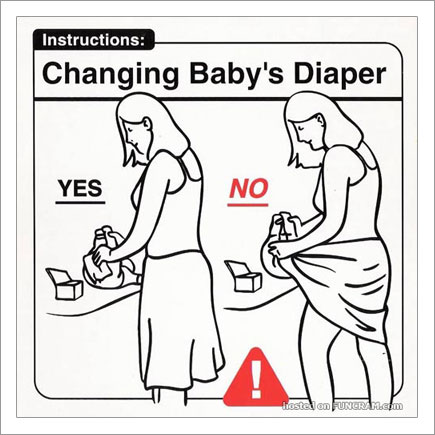
I think the most important thing here is to avoid being offensive, though. We wouldn't put a picture of a baby with a black background because of the death and mourning connotations. But that same picture in South America would be inappropriate with a green background, or with a white background in a Hindu setting.

Wednesday, May 05, 2010

Tuesday, May 04, 2010

PowerPoint 2010 Preview

Microsoft Office 2010 is coming out very soon (currently scheduled for June 15th), so I thought I would highlight some of the features in the new version of PowerPoint.

The video below is pretty impressive considering that it was created entirely using the new version of PowerPoint. They added in some new transitions and effects that will be really helpful in narrowing the gap between PowerPoint and Keynote.

I also really like that within the program you will be able to crop video to the length you want to show and have a fairly robust photo editing solution. Those two things will drastically speed up my ability to create presentations.

Which of the new features are you most excited about?

Monday, May 03, 2010

Anger With God

"My soul is in anguish. 
       How long, O LORD, how long?" Psalm 6:3

Too often in church we neglect the "negative" emotions. We show up and we're supposed to be happy and praise God. We like to sing songs that praise God and talk about how good he is.

But what about when he's not? What about when deep sorrow comes?

The Psalms are filled with the songs of people who are crying out to God in lament, sorrow, and even anger. It's ok to be angry with God. David did it, Elijah did it, and you can do it too.

As a preacher you set the tone for the church and what they think is alright. Show them that it's just fine if they're angry with God. Use stories of loss. Take a video of someone who would like to share about their disappointed with God.

How else could we empower people to express anger with God in healthy ways?

Friday, April 30, 2010

Hire a Professional

Just because you have a program that gives you the ability to do it does not mean that you can do it well. It takes professional skills to do a good job of creating logos, fliers, signs, and web sites. I have made my fair share of terrible media and because of my mistakes, I will tell you that it's worth it to hire a professional.

Logo design is probably the one area where a professional can make the most difference. Your logo is the voice of your brand - people will see it and think of you. What images do you want them to have.

For just a little bit of money you can pay a professional to sweat over this for you.

Why would you be willing to pay a professional to help you?

Disclosure: This is a plug for a friend of mine. You should pay him though - he does good work.

Thursday, April 29, 2010

Google Docs - A Review

I generally love Google's products. Their search engine is great. Their mail app is fantastic. Their mapping software is life changing.

Their presentation software . . . terrible.

Google offers a Google Docs service that has a word processor, spreadsheet, and presentation tool. The word processor is serviceable and the spreadsheet helps for collaboration, but the presentation tool is a waste of time.

It has no ability to crop photos, no slide transitions, and very little of anything else. I could not recommend anyone use Google Docs Presentations for any presentations ever. It is a crime against presentations everywhere.

Wednesday, April 28, 2010

Death By PowerPoint redux

Yesterday the New York Times ran an article about how PowerPoint is used in the military. The picture here is a slide made famous for its obfuscation of meaning.

This military has PowerPoint as an inescapable reality of their daily life with many military leaders spending the majority of their time creating PowerPoint slides.

The problem isn't the program, but the purpose. If this is just a tool to display bullet points and and means for projecting your handouts, then stop. Stop it.

But if you are using software to display graphic information that adds to your talk and supplements your handouts, then you have the elements for transformational communication. The issue is not with the program, but with the presenters.

Is PowerPoint an inescapable reality in your church?

Tuesday, April 27, 2010

Photos that Changed the World

Jonathan Klein the founder of Getty Images talks about some photos that changed the world. War, peace, poverty, and prosperity have been captured and affected through powerful images. Seeing the tragedies of a girl burned by napalm and running naked down the street in Vietnam or the ineffable joy of the sailor kissing the girl to celebrate the end of the war. Images have the power to capture complex emotions and convey volumes of meaning. Images can change people in ways that words cannot. Hearing about the starving in Sudan is nothing compared to seeing a child that is reduced to a skeleton.

What images have changed your world?

Monday, April 26, 2010

Location, Location, Location

I don't know what it is, but for me, sitting at the ocean while the waves crash on the rocks is a God moment. I can't help but think of Psalm 46 (famous for "be still and know") where is says: "though the waters roar and foam, and the mountains quake with their surging, there is a river whose streams make glad the city of God, the holy place where the most high dwells."

What locations are particularly meaningful and inspirational to you? How can you evoke those feelings? How can you bring your church to meaningful places while you preach?

Friday, April 23, 2010

Worth the Money

Name brand Q-tips are worth the extra money. So is good jelly. The same thing with good coffee.

Sometimes it's worth it to pay more for higher quality.

What is worth more in your preaching? Your ministry?

Thursday, April 22, 2010

BibleFresh

I came across this the other day. It's a group publication giving advice to preachers. Some of it is really good stuff. It's worth your time to look through this.

I'm also struck by their dynamic use of high quality images in visually stunning ways. You could learn a lot about images just by looking through this short (34 pages) publication.

What do you think?

Wednesday, April 21, 2010

Masters of the Universe (and other Algebraic Ideas)

The picture to the right is an asymptote - a line that gets progressively closer to another line without ever touching it. I was reading Drive by Daniel Pink, and in it he talks about how mastery of a skill or set of skills is like an asymptote. We can constantly approach mastery, but never achieve it.

Think of it this way: mastery is 100% ability to do what you want to do (say it's preach with PowerPoint). You practice and learn and you go from 0% ability to 50% ability with PowerPoint in short order. That's a huge accomplishment and your preaching shows marked improvement. Now you practice some more and your ability jumps again from 50% to 75% - you're on a roll! You'll have this done in no time. But the next cycle you only get to 87.5% and then 93.75% and then 96.875. You keep getting so close to 100%, but you can never quite get there.

For some of us, that will be frustrating and cause us to want to give up. But for others, we will be endlessly motivated to keep improving. It's so close, so tangible. We can almost get there. We just want to keep getting better.

Which type of person are you?

Tuesday, April 20, 2010

Virtual Choir

This stretches the limits of what we thought was possible with the internet. The composer/conductor Eric Whitacer said: "The intimacy of all the faces, the sound of the singing, the obvious poetic symbolism about our shared humanity and our need to connect; all of it completely overwhelmed me."

I too am overwhelmed. This is just a phenomenal accomplishment. Maybe community doesn't have to be face-to face. Maybe this whole internet thing can actually connect us.

So you know the song is only the first 4:45 of the video, the last section is credits.

You can read more about the project here.

Monday, April 19, 2010

Sabbath Rest

Where did we lose the idea of Sabbath?

I don't know about you, but for me, Sabbath was always talked about as something that went away with the Old Law. When Jesus died on the cross he removed the requirements of the old and freed us to partake of the new.

But why does the Sabbath day fall out along with animal sacrifice and kosher laws? In Mark 2:27 Jesus says: "The Sabbath was made for people, not people for the Sabbath." Did you catch that? The Sabbath was made for us. For us!

Rejecting the Sabbath is like ignoring all the presents under the tree on Christmas morning.

How can we reclaim the Sabbath?

Friday, April 16, 2010

Best of You

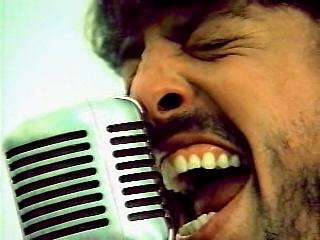
The Foo Fighters sing a song called: "Best of You" it's the one that starts with - "I’ve got another confession to make
I’m your fool
Everyone’s got their chains to break
Holdin’ you

Would you born to resist or be abused?"

The harsh reality of our world is that people often feel bound and abused. Some are physically abused, some are emotionally abused. Some abuse themselves.

Is someone stealing your heart? Are they stealing your passion? Are they stealing your creativity? Are they stealing your soul?

Resist.

Don't let them take what's best in you.

Does your church abuse you? You don't have to say, I know it happens. I know people are stifled and abused by their churches all the time. Their best is ripped away from them and destroyed.

It doesn't have to be that way. You can be creative and soulful and passionate. Resist. Take your best and give it to God, he knows what to do with it.

Thursday, April 15, 2010

Proud Mary

"I left a good job in the city, workin' for the man every night and day." Proud Mary starts as an anthem to following your dream. Working for the weekend is no way to live, no way to thrive. The thing is, people will think you're crazy if you follow your dreams.

Normal people go to college, get a job, get married, buy a house, have kids, retire, and die. That's the story arc that the American dream has become. Churches aren't too different, they are supposed to buy a building, grow up, but they aren't allowed to die.

I'm not knocking normal. We need normal. We need people who feel called to raise families and we need churches that feel called to be stable influences in their community. But we need to empower the crazy people who feel called to drop it all and ride on a river boat; we need to empower the churches that are crazy and want to not own a building, churches that choose to die well, churches that feel called to be different.

The key here is calling. Just because I don't feel called to settle down and have kids in a nice neighborhood doesn't make that a bad thing. It's a very good thing, but it would drive me crazy to go against my calling. What is your calling? What is the calling of your church?

Wednesday, April 14, 2010

Everybody's Working for the Weekend

Remember that old Loverboy song: "Everybody's Working for the Weekend" that played in the 80's? I still don't know if it was an every-man anthem or some sort of critique of modern life. What do you think?

I thought of this song because the wife and I are working mindless temp jobs right now. Our weeks are a mindless trudge that only get better when the weekend comes. A part of what makes it very difficult is that there's no change, no challenge, no variety in our jobs. We show up, do the same thing for eight hours, and then leave. We have no trajectory to our work, no projects that we can be proud of, no way to improve or motivate ourselves.

What happens when church looks like this? When Sunday morning has no trajectory, no improvement or motivation? I've seen it happen, have you? What would you do if your church life was tedious and draining? How could you change it?

Tuesday, April 13, 2010

Amish Paradise

Another response to culture (that also made me think of a song) is to reject it altogether. I couldn't help but think of Weird Al Yankovic's parody of "Gangsta's Paradise" called "Amish Paradise" when pondering this topic.

The Amish are famous for rejecting the trappings of culture and living a simple, pastoral life. They farm and herd and go to church - and that's about it. They don't use electricity or modern technology and they generally stay away from the world - except to buy and sell things.

If we do this as a church then we abrogate our responsibility to be in the world by trying so hard to be not of the world.

Monday, April 12, 2010

Karma Chameleon

Do you remember that song: "Karma Chameleon" by Boy George? I did forget how shocking Boy George is to see - I pulled up that picture and hesitated for a moment before posting it. Look what the 80's did to people!

This song came to mind when I was thinking about responses to culture. One response to culture is to just roll with it - to become a chameleon that shifts with each passing fad. People do this, but so do churches. There is always the church in town that is the hippest at any given time. They're playing the right music in the right way. Their preacher is saying the right things. They are cool - for now.

This is a problematic response to culture though. In the end you either get left in some ridiculous trendy backwater ala Boy George, or you end up with no sense of identity at all because you just keep changing and don't know how to stop.

Friday, April 09, 2010

Culture: Good or Bad?

Culture informs who we are and how we think, but should we embrace our culture or reject it? Is culture good or bad?

The word culture got me to thinking about bacteria - they grow in a group called a culture. If you don't have a good bacteria culture in your gut, you'll get sick. But if you have too much bacteria, you'll get sick. If you have the wrong kind of bacteria, you'll get sick. If you don't have enough of the right kind of bacteria, guess what . . . you'll get sick.

I think that the culture in which we live is similar in that there is good and bad culture out there. We can choose which we will engage. There is also a need for us to limit our engagement to culture. If we over-engage in culture it's just as bad as if we under-engage in culture.

Thursday, April 08, 2010

Call and Response

In the gospel music tradition they used call and response to sing. The leader would sing out the first line and the congregation would repeat it back. The leader would sing the second line and the congregation would sing it back. In this way they could learn new songs quickly without the words or music in print. The tradition adapted to absorb the limitations of life and eventually to make call and response music a culturally distinctive icon of gospel music.

How do we deal with our limitations? In what ways have our limitations prescribed the way we do things? What limitation-responses have become, for us, embedded in our culture?

Wednesday, April 07, 2010

Learning German - When to Change

Right now we are learning German for our time in Vienna, Austria. We will be helping a mission team in Vienna for about two years.

I'm listening to a recording of a lesson that involves a lot of quiz and response, so I'm constantly trying to think of the word or phrase. After an hour, I'm exhausted. It takes a lot of energy for a brain to lay down new neural pathway. But, the next time I listen to the recording, it's easier - and the next is even easier.

When you look for purposeful, vision-driven ways to change, make sure that you implement the changes a little bit at a time. Getting people to create some new neural pathways will take some effort. Let them get comfortable with that change before you move one to the next one.

Tuesday, April 06, 2010

Change for the Sake of Change

Yesterday I said that staying the same is tantamount to being ignored. So that means that I'm obviously an advocate for change all the time, right? Hold on there, Sparky!

Change for the sake of change has the same net effect as staying the same for the sake of staying the same. You end up overwhelming people's ability to connect with what you are saying and doing. If everything is different every Sunday people will walk in and need to re-orient themselves to the situation.

Change needs to be purposeful. If we know why we're changing things, then others will know too and be more comfortable with the change. For example, changing the seating in a church is a scary thing, but having people sit facing each other to show the power of community in a service focused on community is a change with purpose.

Change needs to be visionary. This is different from being purposeful in that a vision carries one into the future on a trajectory. You can have a purpose for one Sunday, but a vision is where you see the church being in five years and that informs your purpose for what you need to be doing now. So, if you want to move the chairs so they face each other, that's great, but where is this taking your church? What's the vision?

Monday, April 05, 2010

The iPad Effect

Ok, I might be mentioning the iPad just because it's big news right now. But why is it big news right now? Partly because it's from Apple and they do a great job of generating a lot of buzz around their products. But a huge reason that the iPad is so noteworthy right now is because it's different.

Our brains are designed to ignore the familiar. This is a defense mechanism that allows us to spot the tiger in the grass and avoid being eaten and to spot the crack our door-frame and avoid being attacked by burglars in our house. If we had to process every piece of information that comes through our senses we would be overwhelmed with data. So, our brain offloads things that are too familiar - the sound of the florescent lights, the smell of the paper mill, the billboards on the way to work - they all fade into the background noise so you can survive.

What happens when church becomes so much background noise? We do the same thing every week. We have the same order (two songs and a prayer anyone?), the same tone, the same people. Sure, the sermon is different and some of the songs are different, but so much is the same.

Is your church just background noise?

Friday, April 02, 2010

April Fools (was yesterday)

In case you didn't catch it, my post yesterday about preaching being outlawed in California was a joke. Preaching is still as legal as ever in the US.

To tie this in to preaching a bit, preachers need to have more fun. There, I said it. Preachers have gotten this reputation for being boring, stuffy, and self-righteous. Think of Reverend Lovejoy from "The Simpsons" he's all of those things and more.

Preaching doesn't have to be the domain of the boring scholar. We can have fun and connect with people through humor while maintaining our scholarship and focus on the Word. The two are not mutually exclusive.

Thursday, April 01, 2010

Preaching Outlawed in California

According to a recent California Supreme Court Decision (found here), preaching the gospel is unconstitutional. The first amendment protects free speech, but it also protects the separation of church and state. The court found that anyone registered as a member of a politically party is an extension of the state's government and therefore cannot be compelled to listen to preaching in any form.

This will surely be appealed to the US Supreme Court. Stay tuned for more.

Wednesday, March 31, 2010

What is the point of preaching?

I've been thinking a lot about the point of preaching. I'm not doubting my calling or anything like that. I'm wondering how we could measure the effectiveness of preaching (like I said yesterday). But in order to measure something, it must be defined in some way.

For example, if preaching is supposed to make us understand God's word more, then we would need to come up with a scale of understanding and measure people before and after hearing a sermon. A successful sermon would show an aggregate increase in their understanding score.

But before we get to the scale, we need to start with the purpose. Why do we preach? Why is preaching a central facet of church life? Some people see preaching as an act of teaching, so it should be educational. Others see preaching as a prophetic word from God so it should be convicting (i.e. hell-fire-and-brimstone). Still others see preaching as an inspiring word so the church should be uplifted and encouraged. But others would argue that preaching is for the purpose of evangelism so the sermon should invite the lost into the kingdom of God.

In my experience, we often don't have a clear purpose in mind for preaching so we try to do all of the above and then we end up doing nothing well.

Tuesday, March 30, 2010

Is Preaching Effective?

If you follow this blog, you've noticed that I have been looking a lot at brain science. I'm fascinated by the way the brain works. Recently there has emerged a new field known as neuro-marketing. Researchers use different brain scanning techniques to determine how people respond to different products. Martin Lindstrom wrote a book called Buyology about the topic.

One of the things that researchers are finding is that the results of traditional marketing can vary greatly from what our brains are actually telling us. We may say that we like something in a focus group, but our opinion is formed by group dynamic as much as by whether we like cheesy poofs dipped in chocolate.

So, how do we know if preaching is effective? We could have focus groups where people report on their opinion. We could send out surveys asking questions to determine the state of things. But what if we started using current science to see what's happening in people's brains?

Monday, March 29, 2010

Beyond Bullet Points

I recently read Beyond Bullet Points by Cliff Atkinson. It's a Microsoft sponsored book about how to use PowerPoint and it looks specifically at how to avoid the evil, coma-inducing bullet points.

He has a great thesis that will make every presentation better. Basically, you are dealing with an information bottleneck when you are presenting. You, as the presenter (preacher) have a lot more information to impart than the listener can possibly get at one time. It is just as bad to overload them with information as it is to underload them. Too much and they shut down and don't get what you're saying. Too little and they drift off for lack of engaging structures to help them assimilate the information.

This makes your goal giving just the highlights of your information using a structure that is familiar to your listeners so they have a way to organize what you're telling them. One example that comes up in the book frequently is that of the checklist - a checklist is something that everyone knows about, so you can use it as a template to organize your information so that people can easily grasp it.

Another great take-away from Beyond Bullet Points is the idea of using a story board for your presentation. Before you start building your slides you plot your story arc - you find your characters, conflict, and setting and sketch out where they are and where they are going. If you are familiar with the Lowery Loop, this will be a similar process, but with the visual element added.

Overall, I would recommend what this book has to say. There are a lot of great concepts in here that will be helpful for presenters of any type. However, for preachers, there is a lot to wade through to get to the good stuff. Mostly what will help you is in the first few chapters - after that it gets pretty tedious. This would be a good book to borrow from the library or a friend.

Friday, March 26, 2010

Images Behind Song Lyrics (Pros and Cons)


I've been wondering why we project pictures behind songs. I can't think of too many good reasons. Maybe to add some variety so it's not too boring looking. Maybe an image will really illustrate part of the song. What am I missing?

However, I can think of a bunch of reasons to NOT put pictures behind song lyrics. It's distracting. It makes the words hard to read at times. More often than not, there is a weak connection between the pictures and the song lyrics.

I'm open, though. Convince me. Why should we put pictures behind song lyrics?

Thursday, March 25, 2010

A New Definition of Insanity


I often hear Einstein's definition of insanity. But I recently heard a different take on the issue.

Shaffi Mather said: "We are insane people trying to do an impossible task; we're insane, though, so we don't know it's impossible."

What would you try to do if you didn't know it was impossible?

Wednesday, March 24, 2010

Metaphorical Meaning

I recently listened to a presentation on the power of metaphor by James Geary. He shared that metaphor is the place where what we know overlaps with what we've experienced.

When Shakespeare has Romeo say: "Juliet is the sun" we take our sun-knowledge and see how it might fit to describe Juliet. Where they overlap is where the metaphor has power.

The thing is that we instinctively create connections between things. We are constantly constructing metaphors - Geary said that we use as many as six a minute.

Visuals can build a powerful metaphor for preaching. Even a visual as simple as the one above. I drew a simple diagram to illustrate my point and by its simplicity it offers a dissonance with the subject matter. A Venn diagram illustrating the metaphor usage in one of the most poetic passages in all of English literature is a bit ludicrous. That's what makes it so effective - all of those thoughts and feelings come together and make my point for me.

How do you use metaphor when you preach?

Tuesday, March 23, 2010

Social Media and Ministry


There's a lot of pressure to be connected to social media today. Sites like Facebook are very popular (it recently passed Google as the most viewed site) and it's important for churches and ministers to be connected here. But I've found that there's a real lack of understanding that keeps churches from being effective in social media. This is not an online newsletter - people can comment and connect in new ways.

Some thoughts:

  • Don't take yourself to seriously. Have fun. Engage people in a real, friendly manner.
  • You can't control what happens all the time. The best case scenario is for you to lose control and for people to be having their own conversations on your Facebook page. Don't fight it.
  • Everyone is equal online. Just because you're the preacher, don't expect to have an more rights than anyone else. 
  • The goal is not to be heard, but to transform the hearers.
A specific case comes to mind here. Recently I posted a status about women's shoes and I got a bunch of comments. A friend of mine (also a minister) lamented that people would comment about shoes, but not about godly topics. So I followed up the next day with a status about religious conversations - I got almost as many comments as the shoe status. The difference between what I asked and a lot of Christian content on Facebook is that I ask questions instead of stating a position. You won't be able to transform you hearers unless they are engaged in the process. Positional statements and citing Scripture without offering questions will kill engagement. 

Monday, March 22, 2010

We Need Each Other (Healthcare riff)

In the Ted.com talk below Jonathan Haidt talks about the differences between liberal and conservative by looking at 5 different moral traits. There are some different traits that lead us to think, act, and vote in different ways. But when we don't engage in dialog with other viewpoints we are trapped. We calcify our point of view and we cannot conceive of change. Basically we're trapped in a world of our own creation - similar to the Matrix.

But what if you wanted to see this world get better? We need each other. Liberals are good at being open to change and seeking the needs of the marginalized. Conservatives are good at being guarding the path to make sure we don't go too far and advocating for the rights of established people. We need both! We need to help the marginalized but not to the detriment of the established. We need to be open to change, but not so quickly that we leave everything that's familiar behind us.

We desperately need each other. Can we please stop fighting and just talk about this? Please!

Friday, March 19, 2010

Embrace Your Inner Girl

Ok, I've been watching a lot of TED lately. The one below is amazing. It's Eve Ensler's plea that the world stop suppressing the girl within all people and begin to embrace her. Even men.

Wait, what? Yes, even men have an inner girl - the part that is sensitive and compassionate, the part that sees the power of relationships before the power of authority. We haven't listened to the feminine voice within the church and we are guilty. We need to repent for the sin of obscuring half of God's creation, half of God's image in this world. If we really believe that humanity is created in the image of God, then femininity is half of that image.

Why don't we preach on the nurturing care of God? The mother-love language that God employs when he says he wants to gather Israel like a mother hen gathers her chicks? The feminine vision of wisdom found in Proverbs - God's wisdom personified in a woman.

If we could preach with the power and the passion of Eve Ensler . . . well, let's just say that the world would be a better place.


Thursday, March 18, 2010

Flow

If you haven't heard of TED yet (you must not read my blog very often) you need to. TED is all about ideas worth sharing and they come from all walks of life. In the talk below Mihaly Csikszentmihalyi (you try and pronounce it) shares from his research about what it takes to make us happy.


The whole talk is good (just under 20 minutes), but one thing stood out to me that I wanted to share with you. His research shows that humans can only absorb about 110 bits of information at one time (a stream of data like body language, words being spoken, smells, feelings of hunger, etc.). Paying attention to a person speaking requires about 60 bits of information, so we can't pay attention to two speakers at once (not fully, at least). 


But if we are only speaking, then we are leaving 50 bits of information unused. Those bits are going to go to something - like a feeling of hunger or noticing the cute girl down the row. For every bit we leave un-engaged, we are losing impact for our message. 


Keep people visually engaged through media and keep them mentally engaged through inductive preaching. I dare you.

Wednesday, March 17, 2010

Neural Pathways in the Church

A little bit ago we talked about how the brain is changing, and some ramifications that might have for preaching. You might remember that within the brain are neural pathways that connect your brain cells together so that you can think something or do something. The more often you think or do something, the larger and stronger that pathway becomes. This is the physiological root of habits and skills.

But the same phenomenon happens in churches. The more we think or do something the easier it is to continue to think and do the same things. This is, in part, due to the combined neural pathways of all the people involved. Basically, the less a church changes, the harder it will be for a church to change.

This is why emerging leaders often don't have a place to serve - it's easier to ask the same people to do the same things again. This is why the carpet is still from 1984, it's easier to just leave it the way it is.

Is this why you aren't using PowerPoint when you preach? Is it just easier to avoid change?

Tuesday, March 16, 2010

Communicator Focused vs. Recipient Focused

I was recently listening to a podcast by Mark Driscoll of the Mars Hill Church in Seattle. He was talking about the power of preaching and how to tell a good preacher. He said that the difference is if the sermon is communicator focused or recipient focused. The former is when the preacher feels good about the sermon preached. The latter is when the church is transformed by the sermon.

Mark said that he measures the effectiveness of a preacher or teacher through the transformation of the listeners. That's huge. Too often we want to be our own judges as we preach - some of us will go so far as to ask our wife what she thought. But, if we're honest, most of us just take the compliments we receive after church at face value. "Nice sermon." "Good lesson." "Thanks for sharing."

What if we had an anonymous survey that asked, not if people liked the sermon, but if they have applied the principles that were preached?

Would this change your use of media in your preaching? If the focus is on the church, shouldn't we do everything we can to communicate to them in transformational ways?

Monday, March 15, 2010

Beware the Ides of March


Did you know that every month had an 'ides'? Most of the time we get so focused on the Ides of March made famous in Julius Caesar by Shakespeare that we don't even think about the fact that the ides is the middle of a lunar month and so corresponds with the full moon.

Often our language gets so wrapped up in our particular context that we don't even think about other meanings and possibilities. When we do this as Christians, we risk leaving people out and confusing them. We live in a post-Christian culture that doesn't know what a testimony is or a sacrament. They might be really confused if you tell them to meet you in the vestibule or the narthex.

We invite people to experience something new and different, but we need to guide them on that journey.

Friday, March 12, 2010

Your Focus Determines Your Reality


I was listening to Will Mancini on a podcast from Rev Magazine yesterday. First, let me say, these are voices that you need to hear - they are saying some good and important stuff for church and ministry.

Will was sharing about what makes a church grow or decline. The one, major issue that Will has identified as a difference between growing and declining churches is that growing churches develop leaders. He said that there are three different modes in which we can function: technician, manager, and leader. A technician does the work, a manager makes sure the work is done, and a leader empowers people.

How are you developing leaders in your ministry? Are you a technician in your preaching - is it just a job to get done? Or are you a leader where you empower others to preach and teach too?

It's great if you are an exciting, engaging speaker, but how are you building up the next generation of leaders to do the same?

Thursday, March 11, 2010

Dave Ramesy up Your Sermons

My wife and I are fans of Dave Ramsey. He's a speaker, author and talk show host that advocates budgeting and getting out of debt. He's been selling out arenas all over the country.

If you don't know who Dave Ramsey is, you might think that sounds weird. He sells out stadiums talking to people about finances - and telling them to do hard things like cutting up their credit cards and getting out of debt.

There are a bunch of financial guys and they aren't popular and even though my wife and I read their books, we still had a hard time following their advice. The difference isn't in the information, but in the inspiration (something Dave said recently).

People don't change just because they receive better information. They won't believe just because your sermon is the most exegetically sound. People change because they are given better information and they are inspired to do something about it. Dave cuts up credit cards on stage and shows the stories of people who have gotten out of debt. How can your sermon inspire people?

Wednesday, March 10, 2010

Question Day

I know this is cheap, but I was called in for a temp job and I don't have much time to post.

On Monday I looked at how PowerPoint has been criticized for not being prophetic. What do you think? Does using visuals preclude preaching with a prophetic voice? Is it an all or nothing proposition?

Duke it out in the comments!

Tuesday, March 09, 2010

A Powerful Presentation

I got to hear a great presentation from Ken Shackelford recently. He was speaking about the Jade Tree Project and the struggles of his son and the faithfulness of the Father through it all.

What I want to highlight for this blog is that he did a great job of using visuals to augment and enhance his sermon without being constrained or limited by his presentation. There were some technical difficulties, but he connected with the A/V guy and smoothly moved on. He knew his material well enough to just flow with it. He also deeply engaged with the audience emotionally through a dramatic reading of Psalm 22 and a transparent telling of his story.

I was transported through his presentation. The lines between us blurred and the lines between me and the text blurred. This was no rigid thing - there were no bullet points, but rather there was connection and feeling - facilitated by a great use of images in preaching (using Keynote if you were curious).

Great job, Ken.

Monday, March 08, 2010

Prophetic Preaching and PowerPoint

Over at Alpha Omega Ministries they recently blogged about how preaching with PowerPoint is not prophetic and is not in line with good expository preaching. Here's an excerpt


 I simply do not find sermons supplemented with Powerpoint conducive to the qualities of soul-grabbing, prophetic, anguishing preaching. 


I think it is safe to say that the main reason why pastors who use PowerPoint is to induce a bullet-point memory in their congregants. But that goal sets the bar too low for God's people. Preaching requires much higher demands on its people. In addition, there is just something about a cold, large projector screen vying attention away from the flesh and blood countenance of the pastor that diminishes my reflective soul to hearing God's Word. And I do not have a short attention span, so I cannot imagine the affect on those who do.


The thing is, I agree with what they are saying. Bullet-point sermons (whether they use PowerPoint, Keynote, or bulletin inserts) are generally boredom inducing. But let's not blame the software for the failings of the preacher. It is possible to preach using PowerPoint in a way that is compelling, emotional, and prophetic.

They go on to cite John Piper who preaches without the use of PowerPoint. Piper is a great preacher with years of experience and he is able to paint a vivid picture with his words. But he's wrong. Images projected can elicit feelings in a new way. At least a third of your audience is comprised of visual learners - they get bored by your talking (not to mention the kinesthetic learners who are going out of their minds).

Stop blaming PowerPoint for your lack of ability. If you preach prophetically, then you will with PowerPoint as well.

Friday, March 05, 2010

The Once and Future Brain #5

This whole week we've been looking at the way that the internet has changed our brains and what that means for communication and preaching (you can catch up here: 1, 2, 3, 4).

I want to end the week by bringing the conversation back around to the main point of this blog - visual communication is essential for reaching the people of the internet generation.

The history of our communication has, in some ways, come full circle. We started as pre-literate people who used story and image to communicate - the cave drawings found all over the world attest to this. Eventually we developed written language and that drastically changed our brains and our world - images were still very important for the illiterate (90% or more of the population). Then the printing press came and made words cheap, but images stayed expensive, we shifted away from images and focused on words. Now with the internet changing communication again, images are storming back to the front.

If you want to communicate with people who have grown up with the internet, an information rich environment where images and audio combine with text, then you need to use information rich means. The other option is losing them - they won't pay attention to a talking head. This isn't because they're young, this is because their brains are drastically different. This isn't a fad that will go away in time - this is as significant as the printing press. You must change or you will become irrelevant.

Am I wrong?

Thursday, March 04, 2010

The Once and Future Brain #4

So this week we have been looking at the way that our brains have changed due to the internet.

One of the major things that has changed is the trust that people place in what they see and hear. We are becoming more and more skeptical all the time. In a way, it's a defense mechanism. We are surrounded by advertisements all the time - if we didn't develop filters to allow us to sort out the good from the bad, we would buy everything and be broke.

We need some skepticism to survive in this brave new world, but that has a huge impact on how we can communicate the gospel. See, if we try to be the authority on the bible, people's skeptical walls will go up. They've been told by three out of four dentists to buy every kind of toothpaste ever made. Positional authority is almost meaningless in convincing people of anything. We have developed broad neural pathways of skepticism and so hearing that something is truth because an authority figure says so, will always be met with doubt.

We need to look at cultivating a relational authority with people. Basically, people trust their friends, so in order for people to trust us, we need to be their friends. We need to tear down the barrier that divides us from the people to whom we're preaching. We need to open the door into our lives and invite them in to see a gospel that isn't true because of our seminary degree, but it's true because it works for us. It works for their friends, and they trust their friends a lot more than dentists.

Wednesday, March 03, 2010

The Once and Future Brain #3


We're continuing to talk this week about how the changes in communication affect our brains and our brains affect our communication.

Yesterday we talked about how our brains are physically different due to the information we process and the way we process information.

There are some fairly huge implications from this. Put simply, the internet is changing our brains. On Monday I mused that the changes hitting us that have been called a philosophical shift (postmodernism) might, in fact, be something deeper and more fundamental. 

See, this isn't the first time all this has happened. Along about 570 years ago some dude named Gutenberg got a bright idea and started printing stuff (HP promptly sued him for patent rights). Because of the shift in the way that the written word was available people's brains started changing. Words that were once rare and expensive to copy by hand were now being printed by the thousands and millions. It used to be that in order for text to be disseminated one had to have good ideas and the financial backing to pay for scribes to copy that idea. The printing press changed all that - words became exponentially cheaper and so more people could exchange ideas. One of the results of this was the Enlightenment, another was the Protestant Reformation. People's brains worked differently and that led them to different thoughts and to different actions and that changed the world forever.

Now words are free - anyone can post a blog about anything. Words are fast - if we have to wait for our information we get angry. Words are ubiquitous - we have to filter out most of the information we receive. Words are superfluous - most of the information we receive is in non-verbal channels. 

What other changes do you see happening because of the internet?

Tuesday, March 02, 2010

The Once and Future Brain #2


This week we're looking at the changes that are happening in our communication and how that is changing everything.

So, yesterday we looked at the concept that everything is changing. The world of fifty or even twenty years ago is gone - the way we process information and interact with each other is vastly different. But why?

The picture to the right is an image of neural pathways - the connections made by our brain when ever we use it for anything. A neural pathway is the connection between neurons in our brain. When we're born we have very few neural pathways, but as we experience things we develop new pathways and each time we experience the same thing again that pathway becomes bigger and stronger. Think of it like a trail - the first time you have to blaze the trail, you cut your way through the forest and get where you're going. But if you walk that same path a dozen times, there will be a trail there. If you walk a hundred times, there will be a path. If you keep walking, packing down the dirt and widening the path, eventually you'll have a road.

Our brains are formed like this from the cradle. We make some paths, we abandon others (which, if not used, will soon be overgrown again), and that's what is physically happening when we learn and grow. So the way that we deal with information becomes as important as the information. If we read a story that creates one set of neural pathways, but if we see the movie it creates a different set of pathways.

You might wonder why it can be difficult for people to adopt a new system (think learning to use the new version of Windows or Office) - it's because the neural pathways for the old system are so firmly established that our brains resist change - it's far easier to use the road than to blaze a trail. So if your pathways were created by reading books in a library, your brain wants to treat the internet like books in a library. But if you're brain learned to read on the internet you are more likely to treat books like the internet than vice versa.

Did you catch all that? What I'm saying is that the internet and electronic communication make it so the brains of younger people are literally different from those of older people. The brains of people who are online a lot are very different from those who are rarely online.

So what does that mean? Stay tuned . . .

Monday, March 01, 2010

The Once and Future Brain #1

This week I want to look at some of the philosophical issues involved in preaching to the next generation.

I have been told that the age of the Enlightenment is dead. We have moved beyond the philosophy that reason will allow us to know all things to . . . something else. In Christian circles it’s being called post-modernity, but that title is already claimed by artists and philosophers. It is post- Enlightenment, post- rationalism, post- imperialism, and post- most other things as well. Really, what it boils down to is a rejection of the way things have been for about the last five centuries.
But I’ve also been told that all this post- junk is just a phase. It’s a trend that will fade away along with every other trend that has claimed to be the rebirth of the church. There is always a group that is looking for the next big thing, the next trend to follow. And that group usually can’t see beyond the scope of what they are doing right now. If church with candles is the trend, they will try to explain how church with candles is the only way to do church. Mostly they are defending a trend and will move on to the next trend before too long.

What if they’re both wrong? Or what if they’re both right? I do think that our world is shifting in some radical and fundamental ways that go beyond a mere trend. But I think that the window dressing that has been put on churches that claim to be post-modern is going to go out of style like leg-warmers and jean jackets.

There’s something big going on here, bigger than most people realize. We are in the midst of some changes that have only happened three times before in the history of the world. This change will transform not only our churches and our culture, but also our brains. There is nothing we can do to stop this change. If we ignore it, we will be left behind, but if we embrace it and anticipate it, we have the potential to translate the Good News into the language of the next generation.