Find us on Google+

Wednesday, August 11, 2010

Is Media Making Us Dumber or Smarter?

Steven Pinker wrote an Op-Ed piece for the New York Times in which he defends mass media against its critics. He points out that every new form of media has met with fierce criticism, and that ultimately the critics have been wrong.
"Media critics write as if the brain takes on the qualities of whatever it consumes, the informational equivalent of “you are what you eat.” As with primitive peoples who believe that eating fierce animals will make them fierce, they assume that watching quick cuts in rock videos turns your mental life into quick cuts or that reading bullet points and Twitter postings turns your thoughts into bullet points and Twitter postings."
I think the same is true in the church. We don't like change, we don't like it when new things come along and force us to think in new ways, so we often descry them as bad or wrong. The truth is that the media isn't bad, the way in which we deliver information can't really be good or bad, but it's the content delivered that is the most important thing.

Have you had a conversation about whether using media in church is good or bad? What's your take on the issue?

Tuesday, August 10, 2010

Sketch it First

I love creating images and presentations in PowerPoint, but it can be incredibly helpful to sketch it first. Get an idea of what you want your presentation to look like with a few simple pen-strokes rather than opening up the photo editing software right away. I use my Moleskine Ruled Notebook Large (affiliate link*) for most of my sermon planning and sketching. It's just about the same size as my bible and the elastic band allows me to tuck a pen in with it. I can take this with me anywhere and work on sermon preparation.

When I sit down with the computer I can get distracted pretty easily. I can jump from image to image without any real direction or purpose. When I have my bible and notebook open though, I can focus on the task at hand. Just so you know, my sketches aren't pretty, usually they are stick-figures, but it gives me an idea of what I'm wanting to do.

*If you purchase through this link I will earn a small commission from the purchase.

Monday, August 09, 2010

Juxtaposition: The Power of Position

Slashdot highlighted a great photographic experiment recently: "Russian photographer Sergey Larenkov has taken old World War II photos and photoshopped them over the locations in present day. The scenes from places like Prague, Vienna, and Moscow are incredibly well done and a neat way to appreciate history." I'm very impressed with the way that the images powerfully compare life now with life 65 years ago.

How would you show the changes in the life of your church?

Friday, August 06, 2010

Don't Just Clean, Organize

Sometimes simple, recognizable images can convey a message more powerfully than words. When Jesus talks about the evil spirit coming back to find the home clean and well swept, that's a good image. But seeing a mess that has been cleaned is powerful. Then, if we take what Jesus said to be advice we see that he's telling us to not just avoid evil, but to replace evil with good in our lives. Don't just clean up the mess, organize it and make it work for good.
"When an evil spirit comes out of a man, it goes through arid places seeking rest and does not find it. Then it says, 'I will return to the house I left.' When it arrives, it finds the house unoccupied, swept clean and put in order. Then it goes and takes with it seven other spirits more wicked than itself, and they go in and live there. And the final condition of that man is worse than the first. That is how it will be with this wicked generation." Matthew 12:43-45

Thursday, August 05, 2010

Where We've Come From

Newsweek recently posted a graphic that shows some significant changes in the past ten years (and some not so significant changes). In 2000 there were 12,000 blogs but today there are 141 million. Google searches have jumped from 100 million to 2 billion per day. Time spent online has climbed from 2.7 to 18 hours a week. Number of text messages has gone from 400,000 to 4.5 billion. Daily newspapers and CD revenue have declined significantly, however.

The point is that change is upon us. The transformation in the way we use and interact with technology is progressing at a pace unseen in the course of human history. In order to preach well, we need to be masters of an ancient text written in dead languages in a foreign culture and be able to communicate to a generation that is comfortable texting, chatting, emailing, watching tv, and listening to music - at the same time. No one said this job would be easy.

The answer isn't just using technology. You can't just start a church web site or facebook page and be successful. You need to understand the new language of technology. It's very similar to learning Greek to translate the New Testament - in order to really get the sense of the meaning you need to understand the culture as well. Spend time learning about this new world, this new language of technology so you can speak the eternal message of the Good News.

Wednesday, August 04, 2010

The Perfect Handshake and Other Dangers to Society


Chevrolet commissioned a team of scientists to discover the perfect handshake formula. It's: "PH = √ (e2 + ve2)(d2) + (cg + dr)2 + π{(42)(4
2)}2 + (vi + t + te)2 + {(42 )(42)}2" And now you know. Go forth and do likewise.

The developed this formula for their car sales people to be able to build trust with potential customers. Now that they know what to do your wallet will never be safe. Or something like that.

The reality is that knowing about something is a far cry from knowing something. The elements of a perfect handshake are: eye contact, verbal greeting, smile, complete grip, dry hand, strength, position, temperature, texture, vigor, and control. All of those things are important elements to a perfect handshake, but just knowing that won't allow anyone to execute the handshake.

The reality is that knowing how to preach a perfect sermon is a far cry from preaching a perfect sermon. You can read all the books in the world and even develop a formula that describes what a perfect sermon looks like, but it takes the practice and confidence of doing it to make it a reality.

Monday, August 02, 2010

Audience Connection Leads to Brain Sync


Wired.com highlighted a recent brain science experiment that tracked the connection between listeners and speakers. "Brain scans of a speaker and listener showed their neural activity synchronizing during storytelling. The stronger their reported connection, the closer the coupling." They used fMRI (functional magnetic resonance imaging) to track the blood flow in the brains of the speakers and listeners during The Princeton researchers found out that when the participants reported a strong feeling of connection during the conversation their brains would light up in the same regions. Rather than using different regions for speaking and listening, the neurons were more closely associated with the shared experience.

When you preach, if you develop a strong connection with your church, they will literally think like you think. This can be a fantastic benefit for conveying the complex themes found in Scripture. The difficulty is that we need to first connect with people. The spoken word is a powerful tool for affecting the brains and lives of people, but the connection is paramount.

How do you connect with your church?

Online Photo Editing: Picnik.com

Update: As of April 19, 2012, Google is closing down Picnik. It was fun while it lasted.

I recently heard about the online photo editing tool Picnik.com so I decided to give it a try. I played with a picture that should be familiar to regular blog readers. In picnik you are able to upload, edit, and save your picture back to your computer. You don't have to sign up for an account or use their online storage (this is a huge plus in my book). The process was fast and simple, yet with powerful tools. I was able to crop, adjust the exposure, color, and sharpness of the image. They also have a red-eye tool, but that didn't apply to this image.

I was impressed by how fast and simple picnik is to use, there was very little waiting between actions and when I clicked "Undo" it was instantaneous. If you need to edit some photos for your next presentation, but Photoshop isn't in the budget, then consider using picnik. It's a great, free tool.

Compare to the original, un-edited photo below.


Friday, July 30, 2010

Bearing Fruit

I like the effect of the background being out of focus. I think it adds emphasis and drama to a still shot.

Thursday, July 29, 2010

The Way Out

Sometimes we need a sign to point the way.

Wednesday, July 28, 2010

Go Toward the Light

This images is a powerful communicator all on its own. What sermon would you preach based on this image? 

Tuesday, July 27, 2010

Axe Cop; or How Visuals can Affect your Presentation

Recently I heard about Axe Cop from a friend on Facebook. It's the story of a cop with an axe who fights bad guys. The great thing about this story is that it's told by five year old Malachi and illustrated by his 29 year old brother Ethan.

What would have been a silly story told by a child is transformed by the visuals into an internet sensation. Over Christmas break between 2009 and 2010 Ethan and Malachi were playing and the story for Axe Cop came out. Ethan drew it and put it online and since then things have exploded. They now have a publishing contract with Dark Horse Comics and will be making some real money - from a kid's made up story.

That, my friends, is the power of visuals paired with words.

Monday, July 26, 2010

iPad Presentations in the Real World


I haven't bought an iPad, but I've heard a lot of buzz around it and there are quite a few preachers that want to know if this will be their next presentation tool. Jan Schultnik over at Slides that Stick recently did a field test with his iPad. How did his experience of presenting with Apple's new device work out? Read on.

First, this was a one-on-one presentation, not like preaching to a large church. He reported problems getting his presentation onto the device - the Keynote app on the iPad wouldn't do what he needed, PowerPoint couldn't transfer, and ultimately he had to use a PDF that had been created on his Mac version of PowerPoint which was imported from his PC version of PowerPoint. Not smooth at all. The presentation was outside, so the screen was difficult to see, and the sensitive touch screen on the iPad made for some miscues in transitions and zooming.

According to Jan: "So, not a perfect experience, but I am learning."

Friday, July 23, 2010

One Year Later


One year ago today I rebooted my blog with a new purpose. Since then I've been doing my best to advocate for better preaching through good use of images. I don't know if I've helped anyone else, but this has been a great time of growth for me.

The discipline of writing five posts a week has kept me thinking and working. I haven't been able to preach at times, but I'm always thinking about how to be a better preacher.

I don't know what the future holds for me or this blog, but this year has been a good one. I look forward to more chances to share with you in the future.

Thursday, July 22, 2010

Virtual Preaching

It's becoming more and more common for churches to have multiple sites with one preacher who is broadcast to all the locations. CNN recently had an article on the phenomenon.

Preachers who don't think they need to be physically present in their church should ask how they would feel if they were forced to preach to high-def images of their congregation every Sunday morning, said Long, Bandy Professor of Preaching at Emory University.
"There's something about embodiment -- that the person who delivers the sermon is actually there -- that's important," Long said

Long has a valid critique, but the response is equally valid.

Young said Biblical church leaders like the Apostle Paul wrote letters that were then distributed to churches across the Roman Empire. The church leaders weren't physically present when those letters -- some of which were later included in the New Testament -- were read aloud, but that didn't make the message any less profound, he said.
"All we're doing is putting high definition, cool technology behind something that's as old as the New Testament," said Young,

So, who is right? Is it a theological issue whether or not the preacher is in the same room with the congregation?

For me, I prefer to be with people when I preach. When I preach I see people's faces and get their reactions. I wouldn't want to preach via video, but for those who preach from a script, it may be a valid way to use their time more wisely.

What do you think?

Wednesday, July 21, 2010

How to Succeed

Success is an odd thing. Often we strive to find it, but when we reach the point for which we were striving we don't feel successful. That's the constant lure of success - it is alway just out of reach.

In some ways this is a good thing - we keep striving to be better and to do more. We keep working hard throughout a career rather than resting on our laurels. But it can be a bad thing if we are under the illusion that success is something that we can grasp.

The truth is that you won't ever be successful. You won't be the best at your job. You won't completely master your field. It's the journey that's the thing. Strive, every day. Work hard all the time. Enjoy the process and let success worry about itself.

Tuesday, July 20, 2010

Should You Buy PowerPoint 2010

I haven't had the chance to play with Office 2010 yet, so I don't have an opinion right now. But over at Slides that Stick they have a quick review of some of the helpful new features in PowerPoint 2010.

Specifically highlighted are the ability to subtract portions of images (seen in the picture), so that you can be more creative and specific with the images you create. Also the ability to remove a background color from an image has gotten a lot better in the new version. In 2007 it could only remove the background if it were one solid color that did not appear in the foreground as well.

In conclusion they say: "Should 2003 users upgrade: definitely, 2007 users, probably only the heavy users."

So, are you a heavy user of PowerPoint? Are you planning on upgrading?

Monday, July 19, 2010

The iPhone 4 Antenna Debacle and Preaching


I've been having a great conversation with a friend of mine about the iPhone 4 antenna issues. If you don't know what's been going on (or you don't want to click on that handy link I put there just for you), I'll fill you in.

Apple came out with a new phone - the iPhone 4, and one of the big changes was to the antenna design so that it would get better reception and not drop as many calls as the 3GS and previous version. Well, the new antenna has a slight flaw such that when you hold it as shown in the picture, the antenna is shorted out by your hand and it drops calls.

Oops!

Back to my conversation. My friend loves Apple and their products and he was defending them through all of this against the sensationalist bloggers that have been blowing this whole mess out of proportion. My response was to say that the bloggers may be sensationalists just trying to cash in, but the reason they can do this is because Apple, as a company, has a reputation for making flawless products. For them to make this kind of mistake is news because they so rarely make mistakes. Actually it's a compliment to a company that does great work with few mistakes.

As a preacher is your reputation so high that any mistake is instantly noticeable because it is so far out of the norm? As a church do you shine so brightly that people are willing to point out the tiniest flaw? I think it should be a compliment.

Friday, July 16, 2010

Routine v. Novelty


Routines help us to know what to expect. They give us a sense of stability and normalcy.

Novelty is the unexpected, it gives us a sense of change and progress.

Neither novelty nor routine are good in themselves. Both have value and meaning for a church. Without routine there would be chaos, but without novelty there is boredom.

The key is finding balance between novelty and routine so that there is a sense of stability with progress, change with normalcy.

How do you find balance?

Thursday, July 15, 2010

Castles


Recently we went out to see the local castle - Castle Bernard. When we were asking for directions, our host said: "It's not that great." To which we responded: " We don't have any castles in America."

Any castle is pretty cool to an American whose country is not as old as most of the buildings in Europe. Castle Bernard was built in the 17th century and was inhabited until the 1920's. Most of Europe exists in the shadow of a castle.

This makes it difficult for Americans to understand what Jesus meant when he preached about the kingdom of God. We don't have kings, we don't have castles, we don't belong to kingdoms.

How can we translate the concept of kingdom into the American culture?

Wednesday, July 14, 2010

Wireless Presenter Security Flaw


Engadget reports that there is a huge security flaw in wireless presenters, you know, those things you can plug into the computer so you can click the slides forward on your PowerPoint for yourself. Apparently, there is no encryption, no security and the computer sees them as a full mouse and keyboard. A hacker could send all sorts of disruptive commands to your computer while you are presenting, not the least of which would be interrupting your presentation.

So, if you see anyone with a rig like the one in the picture, you might want to have the ushers "deal" with them.

Tuesday, July 13, 2010

What's the Point

Seth Godin asks: "What's the Point?"

An idea turns into a meeting and then it turns into a project. People get brought along, there's free donuts, there's a whiteboard and even a conference call.
It feels like you're doing the work, but at some point, hopefully, someone asks, "what's the point of this?"
Is it worth doing?
Compared to everything else we could be investing (don't say 'spending') our time on, is this the scariest, most likely to pay off, most important or the best long-term endeavor?
Or are we just doing it because no one had the guts along the way to say STOP.
Are you doing work worth doing, or are you just doing your job? 

Do you ever go through this process? What systems do you have in place that allow someone to ask: "What's the point?"

Monday, July 12, 2010

World Cup or How Perspective Matters

In the video below you get to see two different perspectives on soccer. One sees the game as, well, boring. The other sees the game as thrilling. Watching the same game produces vastly different reactions.

When we preach, especially with images, we need to be aware of perspectives. Some images will evoke the reaction you hoped for, but they might produce a completely different reaction. For example, a picture of a father with a child should evoke feelings of love and family, but to someone who was abused by their father the feelings are very different.

Don't avoid using images that might evoke a negative reaction, just know that it might happen and be prepared for it. Mention in your sermon that not everyone has a good father image, and move on.

How do you deal with differing perspectives?

Friday, July 09, 2010

Church Unplugged

Summer can be a hectic time in the life of the church. People are traveling, camps are happening, life is anything but normal. It takes a lot of effort and energy to put on a full church service. Maybe the summertime would be a good chance to rest a little. Do a session or two of church unplugged. Don't worry about having your sermon or the songs up on PowerPoint. Don't worry about dressing up. Just relax together and enjoy it.

It would be good to set the stage for this ahead of time. You don't want to surprise people, they don't like that. Build up to it for about a month to let people know what's going to happen.

When I've done this in the past it's been focused on table fellowship. We set up tables and gathered around them. We had some singing and a few words from the preacher, but most of the time was spent sharing an extended and expanded communion meal. Lots of bread and juice were available along with all sorts of other breakfast foods. We got to talk and laugh and share together and it was our church experience. Too often, I think, we separate out fellowship from official church-time, but fellowship is worship and it is empowering to demonstrate that.

How would you do church unplugged?

Thursday, July 08, 2010

Lie to Me


Recently we started watching "Lie to Me" because a friend recommended it to us. We never watched it in the beginning because it came out at the same time as a reality show where someone would be hooked up to a polygraph and asked questions in front of their family and friends and we thought it was the same show. No wonder assumptions have such a bad reputation.

If you haven't seen it, "Lie to Me" is about a scientist who has studied human expression and can tell with great accuracy both when someone is lying and what they're feeling. We can't control our faces as well as we think we can. Micro-expressions register in about 1/5th of a second on our faces and show the truth of what we're saying even when our words don't.

Learning about this can make you a better preacher and a better minister. First, don't lie to your church. You may think that you have a good poker face and you can smile through it to convince them, but you can't hide your micro-expressions. I've seen preachers speak in support of a building program that I knew they didn't support, because of their face and their tone.

Also, look at the faces of your church. If you understand what facial expressions mean, you can understand how your words are affecting your church. Are they surprised, happy, bored, angry, disgusted, interested, or engaged? Their faces can tell you, if you know what to look for. Click around here and see what you can discover.

How do you read your congregation? How do you think they read you?

Wednesday, July 07, 2010

Inspiration for Preaching

Sometimes and image can be a powerful inspiration. I saw this sad sight outside the farmers' market a few weeks ago. I had to get a picture because of the power of this simple scene. Lament is a dropped ice cream cone. A future never realized. A dream dashed on the concrete.

From this image I might preach about Judas. So much was given to him through the course of his time with Jesus, and so much was lost when he would not seek forgiveness after betraying Jesus.

Or I might preach about Paul, who would not take John Mark out for a second missionary journey after he failed on the first attempt. Barnabas saw that there was hope still left and took Mark with him. Later in life, Paul asked for John Mark to come to him as a trusted friend. Despite appearances, redemption is always available. There's always another ice cream cone.

What images inspire you?

Tuesday, July 06, 2010

iPhone Apps for Religious Debate

The New York Times reports that there are a growing number of smart phone apps to help Christians debate Atheists and vice versa.
In a dozen new phone applications, whether faith-based or faith-bashing, the prospective debater is given a primer on the basic rules of engagement — how to parry the circular argument, the false dichotomy, the ad hominem attack, the straw man — and then coached on all the likely flashpoints of contention. Why Darwinism is scientifically sound, or not. The differences between intelligent design and creationism, and whether either theory has any merit. The proof that America was, or was not, founded on Christian principles.

I guess it's the inevitable trajectory of our society to reduce such conversations to quips loaded into our phones. But is this really an effective method of debate (or is debate effective at all)? I've debated many atheists, and while most of the time we come away with respect for each other, it has never changed anyone's mind on the topic. I appreciate their perspective because I take the time to listen to their frustration with faith and Christianity.

The problem with these apps is the problem with debate in our society. It has become little more than an exercise in offering pithy sound-bites. The Presidential debates were not, in any classic sense, debates, but rather opportunities for the candidates to restate their rigid point of view. The same is true of these apps, they give everyone the chance to sound smart, but no one has to actually think about what they're saying or why.

What do you think?

Monday, July 05, 2010

How Many Slides Per Sermon

I was reading Seth Godin's blog (again) and he proposed a radical idea: give a presentation with 200 slides. He says,
You're used to putting three or four bullet points on a slide. That's at least four distinct ideas, but more often, each of those ideas has three or four sub ideas to it. In other words, you're cramming 32 ideas on a slide, and you're sitting on that slide as you drone on and on. Perhaps you spice it up with some reveals or animated bullets, but it's still 32 ideas going stale before our eyes.

So, what does that mean for preaching? I've tended to go another direction, I like to have about 5 slides (one to open, one to close, and one each for the major moves in the sermon). Each slide is an image and a word or short phrase describing the point I'm making.

I don't use bullet points (anymore, I've repented in sackcloth and ashes), but I don't think that the answer is necessarily using bunches of slides. I still break down each point with one slide, but I try to make fewer points and to make them well.

What do you think? Would you give a sermon with 200 slides?

Friday, July 02, 2010

Independence Day

Sunday is the day that Americans celebrate Independence day. This year we are in Ireland - I know they don't have a great love for the English and they have fought for their own independence. However, this is a particularly American holiday.

Sometimes our culture makes us see the world a different way. As Christians we view the world through our own lenses. Sometimes it's good to step back and realize that not everyone thinks like we do. What would your sermon look like on Sunday if you were preaching to a group of non-Christians? What about a group of people that had never seen a bible?

Thursday, July 01, 2010

Teaching Like Jesus

Yesterday I asked if Jesus would use PowerPoint. Since then, I found an article over at Rev.org on a similar topic. Alan Nelson says:
Jesus used a variety of teaching styles. He used mentoring, small group instruction, parables, visual aids, strategic questions, and other forms of active learning. When you think about it, Jesus’ primary discipleship method was a three-year experiential model in which the disciples experienced life with him, resulting in history’s most effective transformation of a small group.
Going on to point out that most churches today don't teach like Jesus at all. He says that Jesus accomplished his teaching by engaging people in experience. Yet, most sermons are lectures with no experience.

How can sermons engage people in experiential learning? One way is to get people engaged in conversation. One option is to use classic artwork, which is available for most bible stories, to evoke conversation.
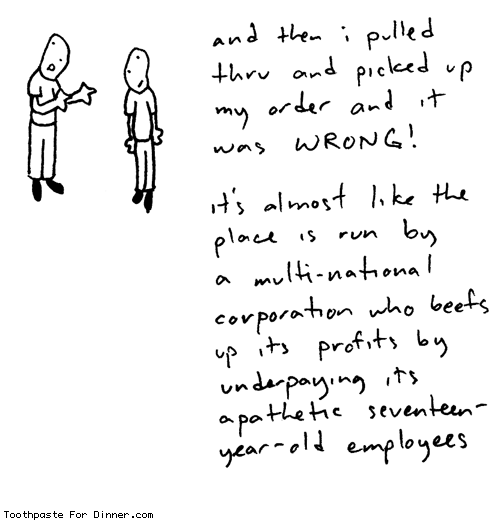
What would you do to teach via experience?

Wednesday, June 30, 2010

Would Jesus Use PowerPoint?

Jesus preached a lot, but he didn't use any technology. So, we don't know if Jesus would approve or disapprove of the use of PowerPoint based on his use of other technology. Jesus did use a boat so that he could preach out on a lake and have his voice carry to more people (shout across the water and see what happens). It's likely that the sermon on the mount was given with Jesus using increased elevation to make himself heard. So, we know that Jesus would use his surroundings to get his message across.

If he walked into your church today would he toss your IT guy a flash drive with his PowerPoint slides on it? I don't think he would need to use it as some sort of gimmick to get people to pay attention, but he was always using visual aids. He pointed to the temple or to the poor widow or to the farmer or the child on his lap. I think it is possible that Jesus would use pictures in a PowerPoint to the same effect. I don't think he would use bullet points or read from his slides. He would still tell stories and parables that engaged people's imaginations rather than lecturing and giving people the only answer.

What do you think? Would Jesus use PowerPoint?

Tuesday, June 29, 2010

Don't Just Say It, Show It

Over at Forbes.com they have put together a map using data from the IRS to show where people are moving, county by county. Below is the map for Multnomah County. The black lines show people moving to the county and the red lines show people moving away. You can see quickly that Multnomah County is drawing far more people than it loses. If you were to click on Detroit or Memphis you would see the opposite where most of the lines are red.

When preaching, it can be difficult to show abstract concepts in a way that is clear and concise. This map tool is one example of how data can be displayed in a dynamic, stimulating manner to enable people to grasp the meaning quickly.

You could use this tool in a sermon to show the numbers of people coming to and leaving your area as a call to work for your church. If people are leaving, then how can your church be a stabilizing factor in a city that is bleeding people? If people are streaming in, then how can your church be a welcoming home for new arrivals?

Monday, June 28, 2010

Validation for Preaching

Seth Godin blogged yesterday about how Validation is Overrated. His basic point is that if you wait for someone else to validate your work, then you are going to spend most of your time waiting instead of doing good work.

I needed to hear this. A lot of my work and especially my preaching is based on a desire to be approved by others. I want to hear that I did a good job. I want to receive praise for my sermon. Now, I'm not always consciously working that way, but I see that side of myself. I have to constantly fight against the need for validation by others. I don't think I'm the only preacher who feels this way either.

Seth ends by saying: "If you have a book to write, write it. If you want to record an album, record it. No need to wait for someone in a cubicle halfway across the country to decide if you're worthy."

Preach what you need to preach and don't wait for someone else to tell you it's ok.

Friday, June 25, 2010

The Airport Effect

Have you noticed how things at the airport inevitably cost more? Because you are captive in their realm, you must pay more for your coffee or your burger. It's true of movie theaters and state fairs too - once they have you, they want to take as much money from you as possible.

Do we do this in church? I know most churches don't have a food court, but often church related items cost more than they should. Books, music, and software for Christians can be quite a bit more expensive than is really necessary.

Do you think it's fair to charge more for Christian media?

Thursday, June 24, 2010

The iPad and Preaching

I recently mentioned Apple's iPad in a blog post, and that was one of the most popular search results for my blog. It dawned on me that people are wanting to figure out how to use the iPad for preaching (or how to convince their church to buy them an iPad by claiming it's for preaching). So I started doing some research to check out the possibilities (inquiring minds want to know).

It looks like there are some cool applications for the iPad and preaching. It offers dual screen support, so with the right cables you should be able to run a presentation from the iPad to a projector. The App Advice blog points out that there is a fake laser pointer function within the iPad feature set. So you could use the touch interface on your iPad to highlight something on the screen.

For preaching I would like to see a way to dynamically jump between slides in a presentation with a touch. The mouse interface is too clunky and slow to be effective during a sermon. I would also want to see my notes and cues so that I could have the slides and the notes in one convenient location. Unfortunately, what I'm seeing is that the iPad doesn't support such functionality. And what I'm seeing about the iDisplay app is not encouraging.

For this moment, it looks like the iPad is not quite ready for prime time. All the pieces are there, but the functionality is lacking. In a perfect world you would have half the screen showing your current slide and notes for that slide and the other half of the screen showing thumbnails of your other slides. You could quickly switch to any of the other slides or point out things on your current slide. Usually Apple comes out with more features later, maybe this will happen with a future software update.

Wednesday, June 23, 2010

Embrace the Wrong

The Boston Globe ran an article about the power of embracing our wrongness. It explores the idea that we perceive being wrong as some great offense, but in reality it is what has enabled us to achieve so much.

"What’s called for is a new way of thinking about wrongness, one that recognizes that our fallibility is part and parcel of our brilliance. If we can achieve that, we will be better able to avoid our costliest mistakes, own up to those we make, and reduce the conflict in our lives by dealing more openly and generously with both other people’s errors and our own."

If we aren't willing to be wrong, we can never improve. The defense of being right has led to so much pain in this world. What if we begin to defend the rights of people to be wrong?

What have you been wrong about?

Tuesday, June 22, 2010

How to Deal with a Technology Glitch, ala Steve Jobs

Lifehacker highlighted the presentation prowess of Steve Jobs. At the iPhone 4 launch he hit a little snag when the phone wouldn't connect to the wi-fi network. But instead of ruining his presentation, he took it in stride and just kept going. He used humor and his relationship with the audience to defuse the situation and things went on.

I have had mixed results at this in my experience. Sometimes I get distracted by trying to fix the problem or I talk about the problem and end up drawing attention to it when most people wouldn't have noticed. I need to develop in this area.

There are a few things that Jobs does that help him. First, he practices his presentations until he knows them flawlessly. These are meticulously scripted events that he appears to be delivering impromptu. Next, move on if possible. There are several occasions where Jobs has just skipped the glitchy part and moved on and the audience barely noticed. If you need to make this point, take a second to collect yourself. If you are silent for a short time while you look into the issue, that will work far better than stammering as you fiddle with your laptop. Finally, remember that you are the presenter. It's not your technology or your PowerPoint (er . . . Keynote) or your video clip. A good presentation is only possible with a good presenter.

How do you deal with tech problems when you preach?

Monday, June 21, 2010

Time Orientation

RSA Animate shares this neat whiteboard video illustrating an idea from TEDTalks star Philip Zimbardo: How our individual concepts of time influence us.

Friday, June 18, 2010

Street Performers and the Gospel

On Saturday we went to see the Street Performance World Championship in Cork, Ireland. The gentlemen pictured are Les Vitamines from Quebec. I think they were the best we saw (and I hope they win). While watching the street performers I was reflecting on preaching (because that's how my brain works).

They had to grab our attention immediately (one performer didn't so we left to get some food). They had to hold our attention through their show, and they had to give us clear instructions for our response after the show. If we didn't give them money, they didn't get paid. They were gracious, often saying: "If you don't have the money, the show is on us and we hope you can improve your situation soon."

In preaching, how can we grab attention, hold attention, and graciously ask people to do something that they normally wouldn't do?

Thursday, June 17, 2010

Strawberries

I learned a few things about strawberries. First, they are hearty plants. We found these plants nearly covered by weeds, yet most of the strawberry plants are bearing fruit.

I learned that strawberries got their name because people would place straw underneath the plants so the berries would not rest on the ground and go bad while they ripened.

I also learned that hay and straw are different things - hay being dried grass and food for animals, straw being dried chaff from grains and bedding for animals. The major difference for the berries is that straw will not absorb water and decompose whereas hay will.

What lessons can you find for following Christ from a strawberry plant?

Even in the worst of conditions we can still bear fruit. Our fruit may be of little use, though, if we don't improve the conditions soon. Just because it looks right, it may not be right; check that what you are doing will actually help and not hurt your situation.

Wednesday, June 16, 2010

Weeds

Proverbs 24
"30 I went past the field of the sluggard, 
       past the vineyard of the man who lacks judgment;
 31 thorns had come up everywhere,
       the ground was covered with weeds,
       and the stone wall was in ruins.
 32 I applied my heart to what I observed
       and learned a lesson from what I saw:
 33 A little sleep, a little slumber,
       a little folding of the hands to rest-
 34 and poverty will come on you like a bandit 
       and scarcity like an armed man."

Tuesday, June 15, 2010

Irish Fields

This is the view from where we are staying this summer. We are working on an organic farm for the summer in Ireland.

As I've been out and working I can't help but think of all the farming metaphors that occur throughout Scripture. I wonder, though, if those vivid images have lost some of their potency for people who get their fruit from the grocery store (like me).

How could we communicate the powerful parables of Jesus to an urban community?

Monday, June 14, 2010

"Up and At Them"

In the Simpsons TV show they decided to do a movie based on the comic book "Radioactive Man" in which the hero's catch phrase is "Up and atom." Unfortunately, the actor hired to portray the hero cannot understand the pun and so continues to say: "Up and at them!" Even work with a vocal coach does little to solve the issue.

Sometimes we get into ruts. Sometimes we can't see the forest for the trees. Sometimes it's useful to get some perspective. This summer my wife and I are volunteering on an organic farm in Ireland. We are pretty much completely outside our normal life. I may post less often over the summer, and my posts may be a bit more tangential, but trust that this is all for the purpose of being a better preacher. Sometimes distance is a catalyst for change.

What helps you get distance from your ruts? How do you foment change?

Monday, May 24, 2010

Blog Break

We are packing to go to Ireland for the summer. Once we arrive I should resume normal blogging, but at this point I don't really have the time.

We are working through WWOOF to learn organic farming. I'll post some of my own pictures in the future, but for the next two weeks or so, I'm going to be getting ready to go.

Friday, May 21, 2010

Could Your Church Survive if there were No Sermons?

A couple days ago Don Miller asked this question on his blog.

Well? What would happen if your church decided to not have sermons for a month? Would people still learn? Would they learn better? Would they learn less?

Sometimes when we take something away we learn its value more.

So, what would happen if you didn't preach for a month?

Thursday, May 20, 2010

Rules for Better Presentations

Over at Ministry Tech they published some great rules for better presentations. Below are his four rules and a little detail on the last one.

1. Don't use built in slide templates
2. Use one simple and concrete image that illustrates your point
3. Reduce the number of rectangles on screen
4. Use the rule of thirds.
Where the lines intersect are the “sweet spots” of the image. The human eye likes balance and will naturally go to these spots in an image. Place imporant elements of the image (faces. eyes, key objects, text, etc…) as close as you can to these “sweet spots”. The results will be that the eye moves smoothly through the image. It doesn’t feel chunky or choppy. People are no longer distracted by the layout. Instead they can focus on your message.

Great advice that is much needed. What would you add?

Wednesday, May 19, 2010

Feminine Voice

Too often the church is dominated by the masculine voice, especially in preaching. Now I'm not trying to start an argument about "women's roles" in the church. That's not my point.

Instead of consistently using sports and war metaphors in sermons, we should expand our voice to include things that might be more applicable and understandable to the female portion of our audience.

This requires thinking with a feminine voice and hearing a feminine voice. Ask your wife about examples. Ask the ladies in your church for examples. Flip through a good magazine aimed at women (I have to specify "good" here because there is so much filth) like "Real Simple" to see what examples are coming up.

Also look for gender neutral examples as much as possible. Let's just say that it would be bad to illustrate a point with a sports metaphor and then say: "And for you ladies, that would be like being in the kitchen and . . . "

How do you preach with a feminine voice?

Tuesday, May 18, 2010

Rhythm

Rhythm is important to what we do. I find that if I sit down to write this blog or to work through a sermon, it matters what time of day I do it. It matters what I've done before and what I'm doing afterward. The act of creating is a rhythmic thing. It involves my mood and my thoughts and my body.

Think about your mood when you write the best sermons. What puts you in that mood? What time of day do you usually feel that way?

Think about your thoughts when you do your best work. What leads your thoughts that way?

Think about your body and your location when you work well. Do you need silence? Do you thrive on being outside?

What is the rhythm of your work?

Monday, May 17, 2010

Office 2010 Web Apps - initial impressions

I sat down at my computer and thought I would do a quick review of the new online component to Microsoft's Office suite. I had heard through the tech news that it was released last week and I wanted to give you a look at it. Oops.

The first sign that something was wrong was when I searched for it and I saw the result: "Office Web Apps - download to use" Um, why would I need to download anything for a web application?

So the second thing that I found out, is that I can use some of the online component with Office 2007 (without having to download the 2010 beta), but when I clicked through, it told me I needed to be using Internet Explorer, Firefox, or Safari - no Google Chrome support. I used my IE emulator extension in Chrome and got in.

I clicked to start a new presentation - and it opened my desktop copy of PowerPoint. That's not a web app!

I did some more reading around and I've discovered that the Microsoft online solution is really only designed for those who already have Office installed on their machine and it only provides online storage and collaboration options. For me this is basically useless, but that's just for me.

I'll post more as I know more.