Find us on Google+
Showing posts with label good samaritan. Show all posts

Friday, October 28, 2011

Preaching the Parable of the Good Samaritan pt. 5

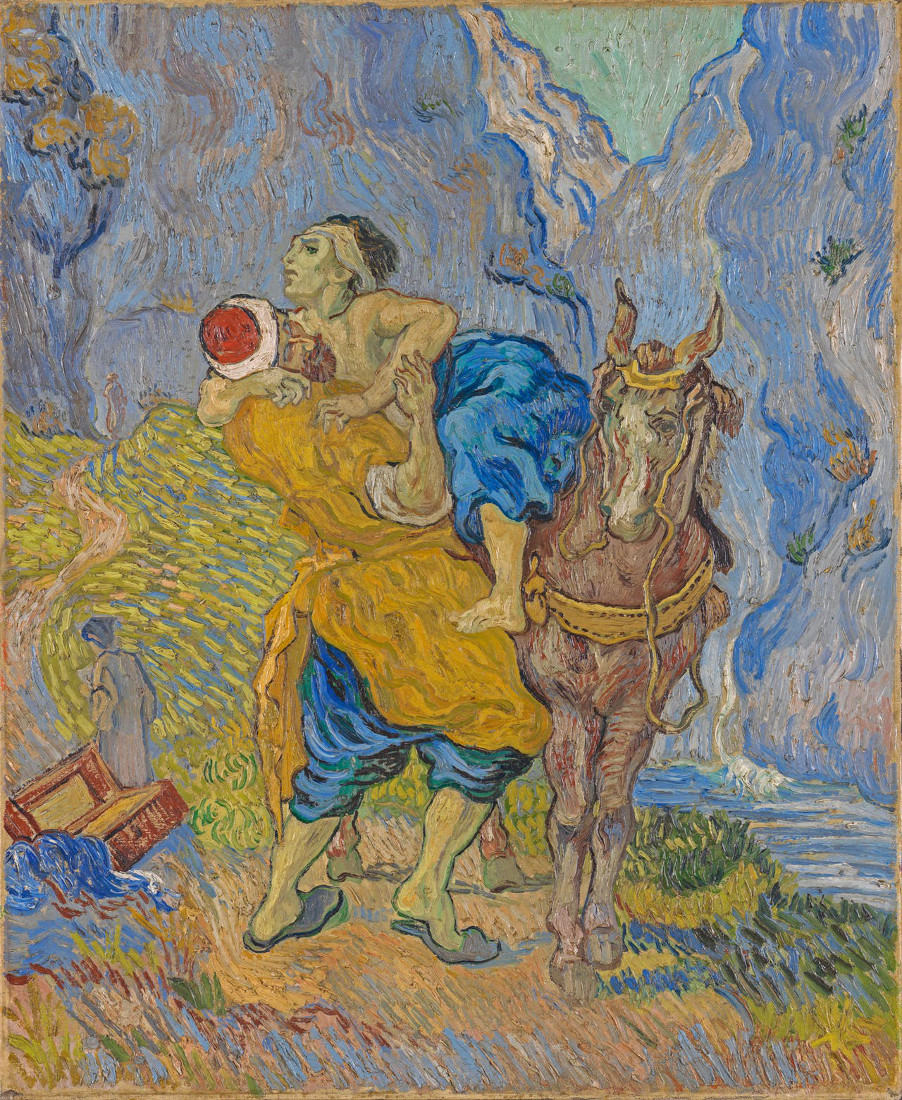
As Christians and Americans, it's out of character for us to ask for help. But it seems like that's what Jesus was teaching in Luke 10. When he was asked to interpret the command: "Love your neighbor as yourself." He came back with the story of the Good Samaritan. The key thing is that the Samaritan is the neighbor to the person who was robbed. So the question posed, "Who is my neighbor?" gets answered with the Samaritan. Essentially, Jesus is saying that loving your neighbor means being willing to be weak and receive help from them. Which shouldn't be surprising since he sent out his disciples without shoes, coats or wallets to beg and preach.

The question that remains, then, is how we can show love to our neighbors the way that Jesus teaches. What real, practical things can we do to love our neighbors?

  • Ask for help when you need it. If you're like me, you often try to do something on your own when it would be much faster and easier to just get some help. Knock on a door or ask someone passing by to help you carry in your groceries. Have a work day where you invite your neighbors to help plant your garden. Find out who's a mechanic on your block and ask them to help you change your oil. 
  • Let other people be the expert. When a church is planning activities, they usually decide what they think the neighborhood want, so there are a lot of harvest parties in October, for example. What if we invited the neighbors to a planning session and asked them what they want to do? What if we asked them to help set up and tear down? What if we delegated responsibility to them (for their party)? 
  • Support local charities. Your church can't do everything. But good is still being done in your neighborhood. Find the local charities that are doing things that you can't do right now. Maybe there's a homeless shelter in your neighborhood and you don't have the resources to run one yourself. Support what they're doing, help them with volunteers and even money. Don't worry about whether people are coming to your church, worry about whether or not they're getting the help they need. 
What other ways could we show neighbor-love like Jesus taught? 


You can catch up on the previous posts here: 1, 2, 3 and 4.

Thursday, October 27, 2011

Preaching the Parable of the Good Samaritan pt. 4

How can churches be weak as a means of showing love? If the point (one of them, at least) of the parable of the Good Samaritan is that we show love by being willing to receive help, then how can we love our neighbors today?

It's clear that Jesus sent out the 72 in the beginning of Luke 10 as shoe-less beggars, and that was his chosen evangelistic strategy. Do we dare do the same thing today?

Our modus operani is to swoop in on a community with all the money and all the answers. We have the big building, we have the food for the poor, we have the programs for the families, we have the well-produced worship service. We have people come to us for what they need and we become, in a way, a clearinghouse of services that people can receive.

This has been the mode of the church for centuries. The Catholic Church was, perhaps, the only stable institution in medieval Europe. If anything good was going to happen, it was going to happen because of the power and stability of the church. But, even after the break from Rome in the Reformation, most churches still hold the identity of being the place of power in a community. The building of a steeple is a not-so-subtle reminder to the surrounding people of where the power and the money are located.

But Jesus came along and called his people to eschew the position of power for one of weakness. Priestly robes were exchanged for beggar's rags. The disciples hobbled in to town after town searching for a person who would give them shelter and food. In exchange, they shared the message of Jesus. The news that the kingdom of God was near. I can't help but wonder if the means by which they went out was a stronger proclamation of God's kingdom than the words that they said.

How can you and your church be weak to show love to your community?

Catch up on parts 1, 2 and 3 of this series.

Wednesday, October 26, 2011

Preaching the Parable of the Good Samaritan pt. 3

What do you do when the point of the passage is obscured by what people think it means? This week I've been looking at how to preach an incredibly familiar passage like the parable of the Good Samaritan. One step is to break through the blinders of familiarity and let people see the passage afresh.

People think that the Good Samaritan story is all about how we should show mercy to those who are in need. We should be like the Samaritan and, in fact, that's what Jesus says at the end. We should go and do likewise. But the expert in the law wasn't asking about showing mercy, he was asking the identity of his neighbor. More than that, the rest of the chapter (Luke 10) doesn't have much to do with being merciful. But, there is a common thread woven through the chapter that might give a clue.

The first part of the chapter details Jesus sending out the 72 to prepare the way for him. They are to go out without sandals, a cloak or a purse -- no coat, no shoes and no wallet. Most places today would refuse them service immediately just because of their appearance. They were going out in complete weakness and dependence. Jesus' missionary strategy was to send out homeless beggars.

Then, after the parable, we get the story of Mary and Martha where Martha is mad that Mary is not doing any of the work. Jesus tells Martha that Mary has chosen well and it won't be taken from her. Jesus tells Martha that effort doesn't necessarily make him happy, but relationship does.

I think the two threads of weakness and relationship come together in the parable of the Good Samaritan. The way the story is set up and the way that Jesus questions the law-expert make the Samaritan the neighbor to the person who was robbed. In answering the question of the law-expert ("Who is my neighbor?") Jesus makes him admit that it's the Samaritan.

Loving your neighbor, true relationship and with it true evangelism, come not from a position of power, but from one of weakness. We show love to our neighbor when we are willing to receive help from them. We engage in true relationship when we put people over tasks and things and we share the good news by being weak and relying on the kindness of others.

Is this a fair interpretation of the parable? Why is this interpretation often avoided or ignored?

Tuesday, October 25, 2011

Preaching the Parable of the Good Samaritan pt. 2

If familiarity breeds contempt, then we must hate a lot of what the bible has to say. Yesterday I talked about the familiar interpretation of the Good Samaritan parable. But how do we get around the familiarity and get to the point that is actually being made?

I started thinking about how parables work and one of the main tools that make parables effective is the reversal of expectations. Another kind of lesson-story that uses the same device is fables. So I started the sermon by recounting Aesop's famous fable, The Tortoise and the Hare. The hare mocks the tortoise for being slow. The tortoise challenges the hare to a race and soon they're off. The hare runs far ahead and stops for a rest while the tortoise plods on. The hare wakes up and dashes off only to reach the finish line just ahead of the tortoise and win the race. That just goes to show you that rabbits are faster than turtles.

Changing the ending of the Tortoise and the Hare story brings about a sense of unfamiliarity. But that's the ending that people expected to hear. A rabbit is clearly faster than a tortoise. The fable gets its sharp point by reversing our expectations and creating a sense of disorientation. In the book, Made to Stick, authors Chip and Dan Heath refer to this as violating a schema; which means that standard expectations are exploded and replaced with the new idea. It's a very sticky way to communicate an idea, but it only works the first time you do it. When the fable or parable becomes the schema, violating it is difficult.

So, my first step was to make everyone aware of the schema, the presuppositions that exist around the parable of the Good Samaritan. We assume that the point of the story is to tell us to be good people and help those in need. We assume that we should mimic the Good Samaritan in the story -- and that is one of the points that come from the story. But the weird thing is that Jesus is using the story to answer a question - the question is "Who is my neighbor?" The words of Jesus at the end of the parable, "Go and do likewise." Don't really answer the question. They tell us that we should be merciful, which is good, but that's not the answer that the expert in the law was looking for.

We'll have to go back a bit to find the answer to the question posed.

How do you violate schemas to make points? What do you do when the violation has become the new schema?

(Note, book links earn me a small commission)

Monday, October 24, 2011

Preaching the Parable of the Good Samaritan pt. 1

How is it possible to say anything new about the most familiar parable in the world? Yesterday I faced that question as I preached the parable of the Good Samaritan to the Oregon City Church of Christ. I was honored to fill in while the ministers were away and I continued their series on the parables of Jesus. I chose the Good Samaritan, in part, because I already have a familiarity with it, but that familiarity was the first hurdle I would face.

It's possible that the parable of the Prodigal Son is as well known as that of the Good Samaritan, but that's only to say that they are among the very few stories of Jesus that have infiltrated popular culture. It's common to hear a news story about a Good Samaritan who helps someone in need. There are hospitals all over the nation named after the compassionate deeds of a character in a story. We hear this message and have our immediate expectations about how it ought to be interpreted.

The Good Samaritan is obviously a story about why we should take care of people on the side of the road. We need to look after the weak and injured among us. Even a lowly Samaritan did the same and showed mercy on an injured, naked man. And we leave it at that point. Our familiarity prevents us from seeing any more than just the beginning of the point.

I believe that what we've turned into the main point of the parable is a secondary point and that Jesus was wanting to communicate something more by the telling of the story. But I'll dig into that a bit more tomorrow.

How do you deal with familiarity when you teach on common texts?