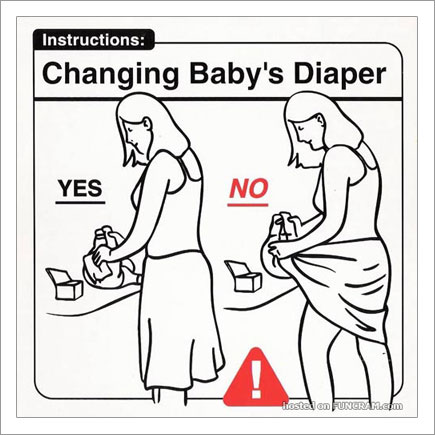
When everything changes, that's exhausting. One of the reasons that moving and getting married are toward the top of the list of stressful activities is that change freaks our brains out.
The gray matter in your noggin is a change detector. It does an amazing job of finding what's new and ignoring what's stayed the same. All of the things in your life that are constant begin to fade into the background and just the different things pop to the surface and demand the attention of your brain power.
But when you're in a completely new situation, the change can become overwhelming. If you've ever traveled to a new country, after a while all the change just begins to drive you crazy. You have to think about where to go to the store, what all the different brands are, how to cook, how to eat and just about everything else. That is exhausting.
When it comes time to implement change. Do it a bit at a time. You might be ready to change everything all at once, but you'll lose people to the stress of too much change. But if you don't consistently change things, then people will come to ignore everything that's happening, which is a problem in itself.
How do you tackle change?
Showing posts with label change agent. Show all posts
Tuesday, June 14, 2011
Tuesday, April 27, 2010
Photos that Changed the World
Jonathan Klein the founder of Getty Images talks about some photos that changed the world. War, peace, poverty, and prosperity have been captured and affected through powerful images. Seeing the tragedies of a girl burned by napalm and running naked down the street in Vietnam or the ineffable joy of the sailor kissing the girl to celebrate the end of the war. Images have the power to capture complex emotions and convey volumes of meaning. Images can change people in ways that words cannot. Hearing about the starving in Sudan is nothing compared to seeing a child that is reduced to a skeleton.
What images have changed your world?
Labels:
change,
change agent,
getty images,
images
Friday, April 16, 2010
Best of You
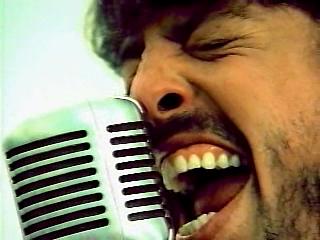
The Foo Fighters sing a song called: "Best of You" it's the one that starts with - "I’ve got another confession to make
I’m your fool
Everyone’s got their chains to break
Holdin’ you
Would you born to resist or be abused?"
The harsh reality of our world is that people often feel bound and abused. Some are physically abused, some are emotionally abused. Some abuse themselves.
Is someone stealing your heart? Are they stealing your passion? Are they stealing your creativity? Are they stealing your soul?
Resist.
Don't let them take what's best in you.
Does your church abuse you? You don't have to say, I know it happens. I know people are stifled and abused by their churches all the time. Their best is ripped away from them and destroyed.
It doesn't have to be that way. You can be creative and soulful and passionate. Resist. Take your best and give it to God, he knows what to do with it.
I’m your fool
Everyone’s got their chains to break
Holdin’ you
Would you born to resist or be abused?"
The harsh reality of our world is that people often feel bound and abused. Some are physically abused, some are emotionally abused. Some abuse themselves.
Is someone stealing your heart? Are they stealing your passion? Are they stealing your creativity? Are they stealing your soul?
Resist.
Don't let them take what's best in you.
Does your church abuse you? You don't have to say, I know it happens. I know people are stifled and abused by their churches all the time. Their best is ripped away from them and destroyed.
It doesn't have to be that way. You can be creative and soulful and passionate. Resist. Take your best and give it to God, he knows what to do with it.
Labels:
best of you,
change,
change agent,
culture,
foo fighters,
passion
Thursday, April 15, 2010
Proud Mary
"I left a good job in the city, workin' for the man every night and day." Proud Mary starts as an anthem to following your dream. Working for the weekend is no way to live, no way to thrive. The thing is, people will think you're crazy if you follow your dreams.
Normal people go to college, get a job, get married, buy a house, have kids, retire, and die. That's the story arc that the American dream has become. Churches aren't too different, they are supposed to buy a building, grow up, but they aren't allowed to die.
I'm not knocking normal. We need normal. We need people who feel called to raise families and we need churches that feel called to be stable influences in their community. But we need to empower the crazy people who feel called to drop it all and ride on a river boat; we need to empower the churches that are crazy and want to not own a building, churches that choose to die well, churches that feel called to be different.
The key here is calling. Just because I don't feel called to settle down and have kids in a nice neighborhood doesn't make that a bad thing. It's a very good thing, but it would drive me crazy to go against my calling. What is your calling? What is the calling of your church?
Normal people go to college, get a job, get married, buy a house, have kids, retire, and die. That's the story arc that the American dream has become. Churches aren't too different, they are supposed to buy a building, grow up, but they aren't allowed to die.
I'm not knocking normal. We need normal. We need people who feel called to raise families and we need churches that feel called to be stable influences in their community. But we need to empower the crazy people who feel called to drop it all and ride on a river boat; we need to empower the churches that are crazy and want to not own a building, churches that choose to die well, churches that feel called to be different.
The key here is calling. Just because I don't feel called to settle down and have kids in a nice neighborhood doesn't make that a bad thing. It's a very good thing, but it would drive me crazy to go against my calling. What is your calling? What is the calling of your church?
Labels:
calling,
change,
change agent,
proud mary
Wednesday, April 14, 2010
Everybody's Working for the Weekend
Remember that old Loverboy song: "Everybody's Working for the Weekend" that played in the 80's? I still don't know if it was an every-man anthem or some sort of critique of modern life. What do you think?
I thought of this song because the wife and I are working mindless temp jobs right now. Our weeks are a mindless trudge that only get better when the weekend comes. A part of what makes it very difficult is that there's no change, no challenge, no variety in our jobs. We show up, do the same thing for eight hours, and then leave. We have no trajectory to our work, no projects that we can be proud of, no way to improve or motivate ourselves.
What happens when church looks like this? When Sunday morning has no trajectory, no improvement or motivation? I've seen it happen, have you? What would you do if your church life was tedious and draining? How could you change it?
I thought of this song because the wife and I are working mindless temp jobs right now. Our weeks are a mindless trudge that only get better when the weekend comes. A part of what makes it very difficult is that there's no change, no challenge, no variety in our jobs. We show up, do the same thing for eight hours, and then leave. We have no trajectory to our work, no projects that we can be proud of, no way to improve or motivate ourselves.
What happens when church looks like this? When Sunday morning has no trajectory, no improvement or motivation? I've seen it happen, have you? What would you do if your church life was tedious and draining? How could you change it?
Labels:
change,
change agent,
weekend,
working for the weekend
Tuesday, April 13, 2010
Amish Paradise
Another response to culture (that also made me think of a song) is to reject it altogether. I couldn't help but think of Weird Al Yankovic's parody of "Gangsta's Paradise" called "Amish Paradise" when pondering this topic.
The Amish are famous for rejecting the trappings of culture and living a simple, pastoral life. They farm and herd and go to church - and that's about it. They don't use electricity or modern technology and they generally stay away from the world - except to buy and sell things.
If we do this as a church then we abrogate our responsibility to be in the world by trying so hard to be not of the world.
The Amish are famous for rejecting the trappings of culture and living a simple, pastoral life. They farm and herd and go to church - and that's about it. They don't use electricity or modern technology and they generally stay away from the world - except to buy and sell things.
If we do this as a church then we abrogate our responsibility to be in the world by trying so hard to be not of the world.
Labels:
change,
change agent,
culture
Monday, April 12, 2010
Karma Chameleon
Do you remember that song: "Karma Chameleon" by Boy George? I did forget how shocking Boy George is to see - I pulled up that picture and hesitated for a moment before posting it. Look what the 80's did to people!
This song came to mind when I was thinking about responses to culture. One response to culture is to just roll with it - to become a chameleon that shifts with each passing fad. People do this, but so do churches. There is always the church in town that is the hippest at any given time. They're playing the right music in the right way. Their preacher is saying the right things. They are cool - for now.
This is a problematic response to culture though. In the end you either get left in some ridiculous trendy backwater ala Boy George, or you end up with no sense of identity at all because you just keep changing and don't know how to stop.
This song came to mind when I was thinking about responses to culture. One response to culture is to just roll with it - to become a chameleon that shifts with each passing fad. People do this, but so do churches. There is always the church in town that is the hippest at any given time. They're playing the right music in the right way. Their preacher is saying the right things. They are cool - for now.
This is a problematic response to culture though. In the end you either get left in some ridiculous trendy backwater ala Boy George, or you end up with no sense of identity at all because you just keep changing and don't know how to stop.
Labels:
boy george,
change,
change agent,
culture
Wednesday, April 07, 2010
Learning German - When to Change
Right now we are learning German for our time in Vienna, Austria. We will be helping a mission team in Vienna for about two years.
I'm listening to a recording of a lesson that involves a lot of quiz and response, so I'm constantly trying to think of the word or phrase. After an hour, I'm exhausted. It takes a lot of energy for a brain to lay down new neural pathway. But, the next time I listen to the recording, it's easier - and the next is even easier.
When you look for purposeful, vision-driven ways to change, make sure that you implement the changes a little bit at a time. Getting people to create some new neural pathways will take some effort. Let them get comfortable with that change before you move one to the next one.
I'm listening to a recording of a lesson that involves a lot of quiz and response, so I'm constantly trying to think of the word or phrase. After an hour, I'm exhausted. It takes a lot of energy for a brain to lay down new neural pathway. But, the next time I listen to the recording, it's easier - and the next is even easier.
When you look for purposeful, vision-driven ways to change, make sure that you implement the changes a little bit at a time. Getting people to create some new neural pathways will take some effort. Let them get comfortable with that change before you move one to the next one.
Tuesday, April 06, 2010
Change for the Sake of Change
Yesterday I said that staying the same is tantamount to being ignored. So that means that I'm obviously an advocate for change all the time, right? Hold on there, Sparky!
Change for the sake of change has the same net effect as staying the same for the sake of staying the same. You end up overwhelming people's ability to connect with what you are saying and doing. If everything is different every Sunday people will walk in and need to re-orient themselves to the situation.
Change needs to be purposeful. If we know why we're changing things, then others will know too and be more comfortable with the change. For example, changing the seating in a church is a scary thing, but having people sit facing each other to show the power of community in a service focused on community is a change with purpose.
Change needs to be visionary. This is different from being purposeful in that a vision carries one into the future on a trajectory. You can have a purpose for one Sunday, but a vision is where you see the church being in five years and that informs your purpose for what you need to be doing now. So, if you want to move the chairs so they face each other, that's great, but where is this taking your church? What's the vision?
Change for the sake of change has the same net effect as staying the same for the sake of staying the same. You end up overwhelming people's ability to connect with what you are saying and doing. If everything is different every Sunday people will walk in and need to re-orient themselves to the situation.
Change needs to be purposeful. If we know why we're changing things, then others will know too and be more comfortable with the change. For example, changing the seating in a church is a scary thing, but having people sit facing each other to show the power of community in a service focused on community is a change with purpose.
Change needs to be visionary. This is different from being purposeful in that a vision carries one into the future on a trajectory. You can have a purpose for one Sunday, but a vision is where you see the church being in five years and that informs your purpose for what you need to be doing now. So, if you want to move the chairs so they face each other, that's great, but where is this taking your church? What's the vision?
Labels:
change,
change agent,
purpose,
vision
Wednesday, March 17, 2010
Neural Pathways in the Church
A little bit ago we talked about how the brain is changing, and some ramifications that might have for preaching. You might remember that within the brain are neural pathways that connect your brain cells together so that you can think something or do something. The more often you think or do something, the larger and stronger that pathway becomes. This is the physiological root of habits and skills.
But the same phenomenon happens in churches. The more we think or do something the easier it is to continue to think and do the same things. This is, in part, due to the combined neural pathways of all the people involved. Basically, the less a church changes, the harder it will be for a church to change.
This is why emerging leaders often don't have a place to serve - it's easier to ask the same people to do the same things again. This is why the carpet is still from 1984, it's easier to just leave it the way it is.
Is this why you aren't using PowerPoint when you preach? Is it just easier to avoid change?
But the same phenomenon happens in churches. The more we think or do something the easier it is to continue to think and do the same things. This is, in part, due to the combined neural pathways of all the people involved. Basically, the less a church changes, the harder it will be for a church to change.
This is why emerging leaders often don't have a place to serve - it's easier to ask the same people to do the same things again. This is why the carpet is still from 1984, it's easier to just leave it the way it is.
Is this why you aren't using PowerPoint when you preach? Is it just easier to avoid change?
Labels:
brains,
change,
change agent,
philosophy
Subscribe to:
Posts (Atom)