You could say that Oscar Pistorius failed. He's a gold medalist in his event, but he went to the 2012 Olympics in London and didn't qualify for the finals in the 400m.
That's surely what they would have said if Usain Bolt had failed to qualify for his event final (instead of winning a second straight Olympic gold medal).
The difference is that Pistorius is a double-amputee. He's been without legs since he was 11 months old. His previous gold medals were in the Paralympic games. With his race, he became the first amputee to participate in the Olympics. Ever.
So, how is that failing? He moved himself forward. He achieved a goal that he's been striving for. He learned about himself, about competition and about what it takes to succeed. All by losing.
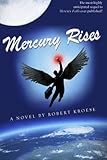
Right now I'm half-way through a Kickstarter campaign. I'm 50% of the way done, but only 29% of the way funded. What if I fail?
What if? I'll still have learned a lot about myself. I'll have shared my story with hundreds of people. I'll have learned about the publishing and fundraising industries. All by failing.
I'm not trying to fail. Neither was Pistorius. We both want to win. But we're not afraid of losing.
I won't quit. I won't give up on this project. I'll fight to win until the last second. I think the story is that good and you need to read it. So why don't you start now?
Are you willing to fail big?
Showing posts with label failure. Show all posts
Monday, August 06, 2012
Monday, December 26, 2011
What Drives You?
There is something that draws you onward. Some force or desire pushes you to get up every morning and keeps you working each day. What is it?
If it's just money, then you'll do anything that will get you money and the quality of a job will be determined by the amount of money it pays. But it's not just money, otherwise you'd do some illegal stuff and make a lot of cash.
If it's just power, then you'll do anything that will get you more power. Stepping on anyone who gets in your way will be a part of the job. But, it's not just power, otherwise you'd sacrifice all your relationships in the pursuit of more power.
It's not just success, otherwise you'll drop anything that prevents you from being successful. The quality of your work will be determined on how often you win or get promoted. But it's not just success, otherwise you'd avoid all risks that might cause failure.
So, what drives you? Sure, money, power and success are all a part of the business world, but they are not an end in themselves. There's more out there, more to do and more to be than just one who follows the carrots that are dangled.
If it's just money, then you'll do anything that will get you money and the quality of a job will be determined by the amount of money it pays. But it's not just money, otherwise you'd do some illegal stuff and make a lot of cash.
If it's just power, then you'll do anything that will get you more power. Stepping on anyone who gets in your way will be a part of the job. But, it's not just power, otherwise you'd sacrifice all your relationships in the pursuit of more power.
It's not just success, otherwise you'll drop anything that prevents you from being successful. The quality of your work will be determined on how often you win or get promoted. But it's not just success, otherwise you'd avoid all risks that might cause failure.
So, what drives you? Sure, money, power and success are all a part of the business world, but they are not an end in themselves. There's more out there, more to do and more to be than just one who follows the carrots that are dangled.
Monday, December 19, 2011
Seek Failure, Eschew Mistakes
There's a difference between mistakes and failure. Failure is trying something and not succeeding. Mistakes are errors in judgement, execution or practice. You can fail without making any mistakes, but mistakes will compound failure.
If we fail and learn from it, then we have grown and the work was worth it. But if we persist in our mistakes we develop habits that lock us into more mistakes.
Seth Godin says:
How can you fail today?
If we fail and learn from it, then we have grown and the work was worth it. But if we persist in our mistakes we develop habits that lock us into more mistakes.
Seth Godin says:
We need a lot more failures, I think. Failures that don't kill us make us bolder, and teach us one more way that won't work, while opening the door to things that might.
School confuses us, so do bosses and families. Go ahead, fail. Try to avoid mistakes, though.
How can you fail today?
Labels:
failure,
mistakes,
seth godin
Friday, October 21, 2011
How to Be Successful when You're a Failure
So there was the guy named Rob Kroese and he wrote a book. The book was about angels, the apocalypse and bad restaurants in Southern California. Rob submitted the book to a bunch of agents and the response he got was "are there any vampires in this?" Vampires were pretty big at the time (I guess it's zombies now). So without the requisite vampires, he decided to try the self-publishing route.Rob used his blog to get a few hundred people to commit to ordering the book. Once he had enough interested people, he printed the book using Amazon's self-printing service which gave him access to the Kindle store. He sent free copies of the book to lots of top reviewers on Amazon and secured lots of high ratings (well deserved) and also put his book on sale for $0.99. So he sold a lot of books and got a lot of good reviews.
Amazon noticed his success and picked him up as a publisher through the Amazon Encore publishing house, so his sequel to the first book is all official and stuff. But he never would have had the sequel if he didn't reject the notion that he was a failure.
The short answer is that you can be successful on your own when other people label you a failure, but you have to work hard at it. Rob busted his butt marketing his own book to get to the point where Amazon took notice if his work. Not too shabby.
How have you been labeled a failure? What hard work can you do to change that?
(Note links to the books earn me a small commission and earn Rob some royalties)
Thursday, October 20, 2011
How to Get Better at Everything
Whenever I'm asked for advice on cooking, especially by younger cooks getting started, I say that you have to make bad food to make good food. I love making bread, but in learning how to make amazing bread I've made some inedible loaves. I learned from those experiences and applied that to future bread. The same is true with everything in the kitchen. I won't know what I should avoid if I don't make any mistakes. Every time I cook something (even when it's delicious) I'm always thinking about what I would do differently the next time.
When you're presenting, you need to have the same attitude. Make mistakes. Make them big and bold. I know how to put together a good PowerPoint presentation now because I've created some truly awful ones in the past. We're talking bullet points filling the screen and animations on every page and then, the coup de grace was when I didn't embed the font for the Greek words I put into the presentation. They just looked like misspelled English and made the presentation look even worse. I learned a lot from that experience. It was bad.
You can see it here:
But that was four years ago and I've learned a lot since then. So much so that I won the Microsoft PowerPoint competition in the best use of graphics category. You can improve in your use of PowerPoint, or anything that you're working on. But only by trying and making mistakes do you learn to improve.
What have you learned from your mistakes?
When you're presenting, you need to have the same attitude. Make mistakes. Make them big and bold. I know how to put together a good PowerPoint presentation now because I've created some truly awful ones in the past. We're talking bullet points filling the screen and animations on every page and then, the coup de grace was when I didn't embed the font for the Greek words I put into the presentation. They just looked like misspelled English and made the presentation look even worse. I learned a lot from that experience. It was bad.
You can see it here:
But that was four years ago and I've learned a lot since then. So much so that I won the Microsoft PowerPoint competition in the best use of graphics category. You can improve in your use of PowerPoint, or anything that you're working on. But only by trying and making mistakes do you learn to improve.
What have you learned from your mistakes?
Tuesday, April 12, 2011
Fail Well
Failing might be a meme on the internet, but it's also important to being a success in life. Seth Godin points out that failure avoidance is actually working against yourself. If you plan to not fail you are planning to not succeed. For without failure and the subsequent lessons learned, we can't achieve any measure of success.
How can you plan to fail well in your public speaking? First, start by doing risky things. Speak a form that you aren't used to. Practice story telling or joke telling. Speak from a script if you typically use an outline. Use an outline or even no notes. Act out a dramatic scene or talk to the kids (they will let you know if you failed).
Try other things that are outside of your comfort zone. If you're a preacher then join a public speaking club like Toastmasters where you can't talk for half-an-hour about the bible. If you're like me it will challenge you and cause you to fail. Take up a hobby where you learn a new skill then perform that skill in public where there's the high risk of failure.
Learning to fail publicly gives us the confidence to keep trying new things. Experimentation is the only proven road to success, but it's filled with potholes. If you experiment, you will fail. But you stand the chance to learn valuable lessons about yourself and your craft through the process.
How have you failed well? What important lessons have you learned?
How can you plan to fail well in your public speaking? First, start by doing risky things. Speak a form that you aren't used to. Practice story telling or joke telling. Speak from a script if you typically use an outline. Use an outline or even no notes. Act out a dramatic scene or talk to the kids (they will let you know if you failed).
Try other things that are outside of your comfort zone. If you're a preacher then join a public speaking club like Toastmasters where you can't talk for half-an-hour about the bible. If you're like me it will challenge you and cause you to fail. Take up a hobby where you learn a new skill then perform that skill in public where there's the high risk of failure.
Learning to fail publicly gives us the confidence to keep trying new things. Experimentation is the only proven road to success, but it's filled with potholes. If you experiment, you will fail. But you stand the chance to learn valuable lessons about yourself and your craft through the process.
How have you failed well? What important lessons have you learned?
Labels:
failure,
public speaking,
speaking visually
Friday, January 15, 2010
Make Terrible Presentations
In order to make good presentations you will need to make a bunch of terrible ones. The story on this blog highlights my point.I haven’t really talked about this before, but I’ve failed more times than I can remember. I’ve tried starting up several businesses, tried patenting inventions, tried starting up online communities, tried building several websites, tried to win contests… and failed almost every single time. But I never chalked any of them up as failures in my head, because I learned so much in the process each time. So now, when I’ve finally reached a point where things seem to fall into place with far less effort, I can’t help but think about all those times where I didn’t succeed over the course of the last eight years. And I look back in fondness, because those lessons learned are the reason I’m here. None of this stuff happened over night — in a way, I’ve been working to reach this point since I was 15.
I actually shouldn’t even call them failures, because they were really just attempts. There’s a huge difference there. Everyone has failures, but most people never attempt things just for the sake of trying out something that looks fun, interesting, or challenging.If you want to be good at anything you need to be willing to fail, repeatedly, in order to gain the experience to be good at it. It might be intimidating to start using PowerPoint now because you feel pretty confident in your preaching skills. Adding something new could make you look like a rank amateur instead of an experienced professional.
My advice - get the church in on the project with you. Let them know what you're doing and why and ask for help. Vulnerability like this will actually boost your credibility and be a great example to the church. I dare you.
Subscribe to:
Posts (Atom)